Expectations are high for the upcoming 2027 Nashik Kumbh Mela. This auspicious bathing festival will not only attract millions of devotees but also display India’s spiritual heritage with numerous akharas. These religious sects are communities for monks and highlight ancient customs that date back centuries. Join us on a captivating journey as we delve into the history and diversity of these akharas unveiling their significance, rituals, and unique characteristics that make them an integral part of this grand festival.
Introduction: Akharas of Nashik Kumbh Mela
The Akharas are considered the spiritual pillar of the 2027 Nashik Simhastha Kumbh Mela. Ancient Monastic Orders of Hindu saints and ascetics, Akharas are known to uphold tradition and rituals, drive spiritual education and lead the foremost rituals at the Kumbh Mela. Their spectacular processions, Naga Sadhus and Royal Bath (Amrit Snan) are main attractions at the festival curated by them.
Brief history of the Nashik Kumbh Mela
(1) What Is an Akhara?
An Akhara (Sanskrit: आखाड़) is an order of monks that practices Hinduism. Monks (Sadhus), ascetics, and teachers associated with an Akhara practice the same lineage and philosophy. Traditionally, Akharas trained ascetics in self-discipline and martial arts skills, which were utilised for the protection of pilgrims and temples along Hindu pilgrimage routes when there were conflicts. Akharas today work to uphold Sanatan Dharma through sadhanas (spiritual practices), religious studies, and seva (service).
(2) History of Akharas
The Nashik Kumbh Mela has roots that trace back centuries. Historical texts indicate its significance as one of the four sacred sites where nectar spilled during a cosmic battle between gods and demons.
The origin of the Akharas dates back many centuries. They are traditionally associated with the efforts of great Hindu teachers to organize ascetics into disciplined monastic communities. Over time, these organizations became closely connected with the Kumbh Mela, where they gather to:
- Initiate new ascetics
- Perform sacred rituals
- Conduct religious discourses
- Lead ceremonial bathing processions
- Preserve ancient spiritual traditions
Today, the Akhil Bharatiya Akhara Parishad coordinates the recognized Akharas that participate in the Kumbh Mela.
Why Akharas Important in Kumbh Melas
An akhara is a Hindu religious and monastic community that centers on mutual spiritual practices, authorities, and customs. It is comprised of ascetics, sadhus, and Naga saints.
- Preserving Sanatan Dharma – Akharas play a key role in protecting and promoting the teachings of Hinduism. They preserve ancient scriptures, rituals, traditions, and spiritual practices for future generations.
- Leading the Kumbh Mela – During the Kumbh Mela, Akharas organize and lead the Amrit Snan (Royal Bath), one of the festival’s most sacred ceremonies. Their grand processions, known as Peshwai, attract millions of devotees and visitors.
- Spiritual Guidance
- Saints and Mahants from Akharas conduct:
- Religious discourses
- Meditation sessions
- Yoga practices
- Scriptural teachings
- Spiritual counseling
- These activities help devotees deepen their understanding of Hindu philosophy and spiritual life.
- Training Future Saints – Young aspirants who choose a life of renunciation receive guidance and training within Akharas. They study sacred texts, learn spiritual disciplines, and prepare to continue the traditions of their order.
Role of Akharas During Kumbh Mela
At the Kumbh Mela, Akharas:
- Lead the sacred Amrit Snan.
- Organize the Peshwai (royal entry procession).
- Set up camps where pilgrims can meet saints and attend spiritual discussions.
- Perform yajnas, bhajans, and religious ceremonies.
- Offer blessings and guidance to devotees.
Their participation gives the Kumbh Mela its distinctive spiritual and cultural character.
Why Were Akharas Established?
Akharas are amongst one of the ancient spiritual organizations of Hinduism. Akharas were formed with the primary objectives of upholding Sanatan Dharma, grooming saints and Sadhus and disseminating spiritual learning and shielding Hindu religious ethos.
- To Protect Sanatan Dharma
- To Organize Saints and Ascetics
- To Protect Temples and Pilgrims
- To Spread Spiritual Knowledge
- To Preserve Ancient Traditions
- To Train Future Spiritual Leaders
Types of Akharas in the 2027 Nashik Kumbh Mela (Shaiva, Vaishnava, Udasin Akharas, Nirmal)
Shaiva Akhara – The akharas hold Lord Shiva in high reverence as the ultimate divine being. They consist of some of the most ancient and prominent orders, with many of their sadhus belonging to the Naga sect, identified by their ash-covered skin and simple attire. As per tradition, Shaiva akharas commonly perform ablutions at Kushavarta Kund in Trimbakeshwar, located near the origin of the Godavari River.
Major Shaivite Akharas include:
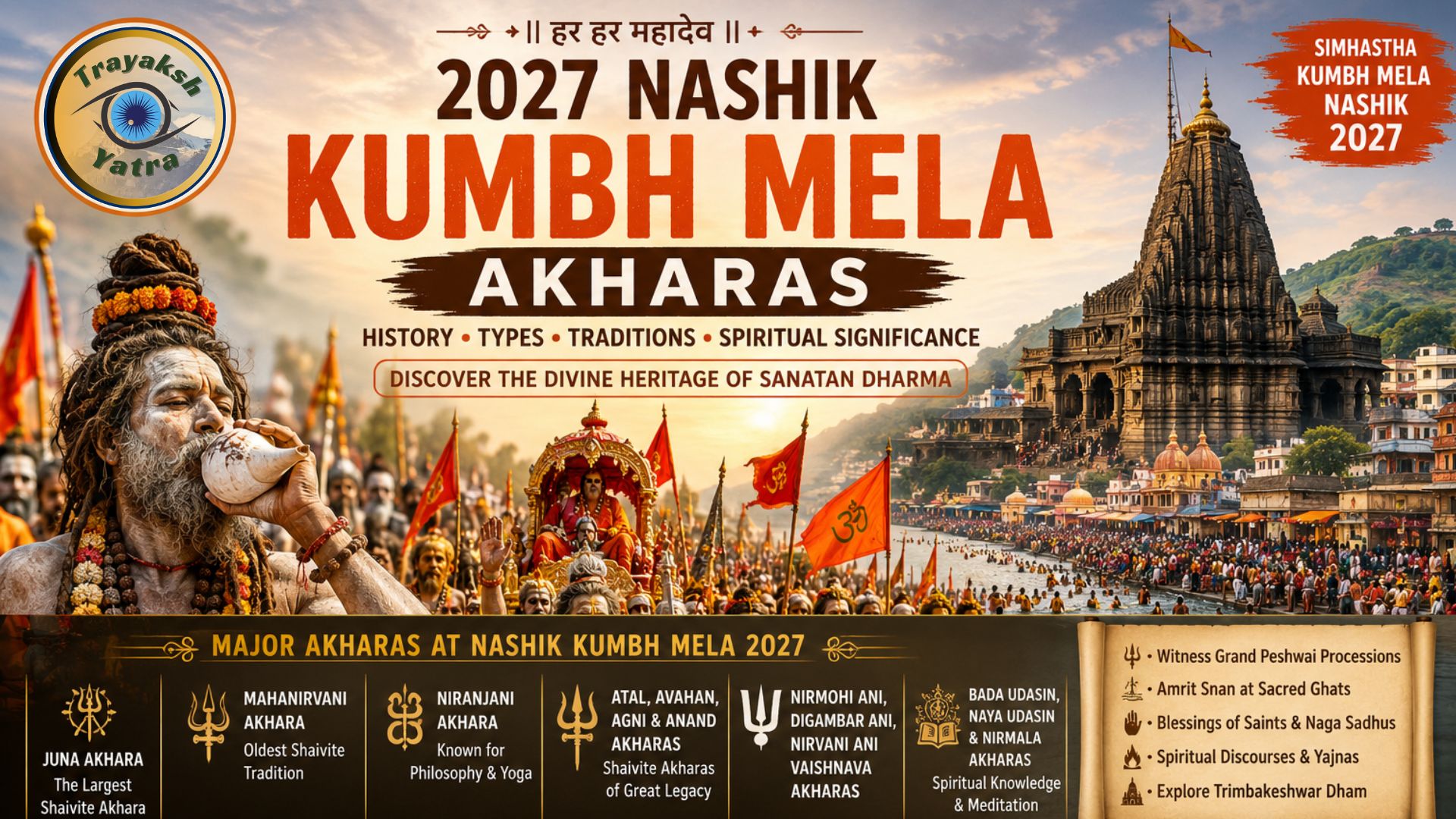
- Juna Akhara
- Mahanirvani Akhara
- Niranjani Akhara
- Atal Akhara
- Avahan Akhara
- Agni Akhara
- Anand Akhara
The Juna Akhara is the largest and traditionally receives the first entry for the royal bathing procession at Nashik Kumbh.
Vaishnava Akharas – Akharas that worship Vishnu and his avatars are known as Bairagi akharas. Sadhus of Vaishnava akharas wear saffron clothes and tilaks on their forehead. They show their allegiance to Lord Vishnu. Vaishnava akharas in Nashik have special ties with Ram Kund in Panchavati.
The three principal Vaishnava Akharas are:
- Nirmohi Ani Akhara
- Digambar Ani Akhara
- Nirvani Ani Akhara
Their traditions emphasize devotion (Bhakti), scripture, and devotional singing.
Udasin Akharas – The Udasin tradition traces its origins to Sri Chand, the elder son of Guru Nanak. It blends elements of Hindu and Sikh spiritual philosophy. They have their own akhara systems and take part in the Shahi Snan procession, albeit with fewer members compared to Shaiva and Vaishnava orders.
The three principal Udasin Akharas are:
- Bada Udasin Akhara
- Naya Udasin Akhara
- Nirmal Akhara
Their focus is on meditation, simplicity, and spiritual discipline.
Order of the Shahi Snan Procession
- Naga Sadhus – The Naga Sadhus are the first to head towards the ghat; smeared with ash and sometimes unclothed, they advance while loudly chanting mantras and carrying tridents and swords.
- Mahants and senior – Distinguished mahants and seasoned experts lead the way on adorned chariots, elephants, or horses, accompanied by their disciples waving the akhara flags.
- Regular Sadhus – Organized lines of regular sadhus and their disciples follow behind, engaging in the joyful rhythm of drums, conch shells, and cymbals.
- The akharas – adhere to a predetermined order for bathing, strictly controlled by their representatives and the local authorities.
- General Devotees Participate – Once the participating akharas have finished their ritual bath, general devotees are then permitted to enter the river.
- The Grand Peshwai Procession – Before the Shahi Snan, each Akhara enters the Kumbh Mela area in a ceremonial procession known as the Peshwai.
The procession features:
- Decorated elephants and horses (where permitted)
- Traditional bands and drums
- Religious flags
- Chariots carrying Mahamandaleshwars and saints
- Naga Sadhus chanting “Har Har Mahadev”
- Thousands of devotees accompanying the Akhara
- The Peshwai marks the formal arrival of the Akhara at the Kumbh
Viewing this procession is an awe-inspiring highlight of the Kumbh Mela, often prompting pilgrims to strategically plan their visit around it.
How Visitors Can Respect Akhara Traditions During Kumbh Mela
Kumbh Mela is the largest spiritual gathering on Earth and a very auspicious festival where Hindu devotees from around the world gather to pray, bathe, witness amazing things and soak in India’s spiritual atmosphere. Kumbh Mela is organised by the Akharas, which are centuries-old monasteries that uphold the traditions of Sanatan Dharma.
If you’re a pilgrim, a tourist, a photographer, or visiting from abroad, here are some things you should know about Akharas. Learn what they stand for and how to treat them with respect while you’re visiting the Kumbh Mela.
- Dress Modestly
- Seek Permission Before Taking Photographs
- Maintain Silence During Rituals
- Respect the Saints and Naga Sadhus
- Follow Akhara Rules
- Do Not Touch Sacred Objects
- Respect Queue Systems During Darshan
- Participate Respectfully in Bhandara (Community Meals)
- Keep the Kumbh Mela Clean
- Respect Different Traditions
- Avoid Spreading Misinformation
- Follow Official Instructions
Naga Sadhus and their association with Akharas
The word “Naga“ means naked, symbolizing complete detachment from worldly possessions and ego. Naga Sadhus are ascetic monks who dedicate their lives to spiritual practice, meditation, and the worship of Lord Shiva.
The Naga Sadhus are among the most respected and fascinating ascetics in Hinduism. Known for their intense spiritual discipline, renunciation of worldly life, and unwavering devotion to Lord Shiva, they are a defining presence at the Kumbh Mela. During events such as the Nashik Simhastha Kumbh Mela, Naga Sadhus lead the grand Amrit Snan (Royal Bath) processions, drawing the attention of millions of pilgrims and visitors.
Their lives are deeply connected with the Akharas, the traditional Hindu monastic organizations that preserve spiritual teachings, train ascetics, and uphold centuries-old religious traditions.
Spiritual Importance of Nashik Kumbh Mela Akharas
For devotees, the presence of akharas elevates the Kumbh Mela from a mere gathering to a profoundly sacred occasion. The rituals performed by the akharas serve to purify the river even further, and visiting their camps or observing their prayers is considered extremely auspicious by devotees.
Pilgrims often seek blessings from mahants, partake in religious discourses within the akhara camps, and use this opportunity for introspection, self-restraint, and spiritual growth known as Kalpavas.
These ancient Hindu monastic traditions are carefully preserved and passed down through generations by the akharas, ensuring that the lineage remains vibrant and intact.
Conclusion
The Akharas of the 2027 Nashik Simhastha Kumbh Mela are much more than religious organizations—they are living institutions that preserve India’s spiritual heritage. From the majestic Peshwai processions to the sacred Amrit Snan, their presence defines the identity of the Kumbh Mela. For pilgrims and visitors alike, learning about the Akharas offers a deeper appreciation of one of the world’s greatest spiritual gatherings.
FAQs
1. How many Akharas participate in the Nashik Kumbh Mela?
There are 13 recognized Akharas, grouped into Shaivite, Vaishnava, Udasin, and Nirmala traditions.
2. Which is the largest Akhara?
The Juna Akhara is the largest and traditionally leads the first Amrit Snan procession at the Nashik Kumbh.
3. Who are the Naga Sadhus?
Naga Sadhus are ascetic monks, primarily from the Shaivite Akharas, who renounce worldly life and are renowned for their austere spiritual practices.
4. What is the Peshwai procession?
The Peshwai is the ceremonial procession marking the formal arrival of an Akhara at the Kumbh Mela before the main rituals begin.
5. Why are Akharas important in the Kumbh Mela?
They organize the principal rituals, preserve ancient Hindu monastic traditions, provide spiritual guidance, and play a central role in the religious and cultural identity of the Kumbh Mela.