
The Kumbh Mela is the world’s largest peaceful religious gathering, drawing millions of pilgrims, saints, and visitors from across the globe. Held at four sacred locations in India—Prayagraj, Haridwar, Nashik, and Ujjain it is a celebration of faith, spirituality, and centuries-old traditions.
One of the most frequently asked questions about this grand festival is: Who started the first Kumbh Mela, and when did it begin?
The answer combines Hindu mythology, historical evidence, and evolving religious traditions. While there is no single historical record identifying one founder or an exact starting date, scholars and religious traditions provide a fascinating picture of how the Kumbh Mela developed over time.
Introduction to the Kumbh Mela
The Kumbh Mela is a spiritual event like no other. It brings together millions of people in a powerful expression of faith and devotion. Witnessing the Kumbh Mela in person is truly a life changing experience. Vibrant colors, chants, and smells coming together along India’s holy rivers. But who started the world’s largest peaceful gathering? Who started the very first Kumbh Mela? Let’s find out
What is the significance of the Kumbh Mela?
Kumbh Mela is not just festival but spirituality personified. Devotees from millions across India come here with a hope to cleanse their soul. Bathing in holy river during the auspicious Kumbh provides you redemption by washing away your sins.
Why Is It Called “Kumbh” Mela?
The Sanskrit word Kumbh means “pot” or “pitcher.”
It refers to the sacred pot containing the nectar of immortality (Amrit) from the Samudra Manthan legend.
The word Mela means fair or gathering.
Together, Kumbh Mela means the festival associated with the sacred pot of Amrit.
The Mythological Origin of Kumbh Mela
The roots of the Kumbh Mela lie in the ancient Hindu legend of the Samudra Manthan (Churning of the Ocean), described in texts such as the Bhagavata Purana, Vishnu Purana, and Mahabharata.
According to the legend:
- The Devas (gods) and Asuras (demons) churned the cosmic ocean to obtain Amrit, the nectar of immortality.
- When the nectar emerged, a fierce battle broke out over its possession.
- During the struggle, four drops of Amrit fell on Earth.
These four sacred places became:
- Prayagraj
- Haridwar
- Nashik
- Ujjain
These sites are now the permanent venues of the Kumbh Mela.
Who Started the First Kumbh Mela?
There is no historical evidence that a single person officially started the first Kumbh Mela.
However, many historians believe that the festival evolved gradually through centuries of Hindu pilgrimage traditions.
A widely accepted tradition credits Adi Guru Shankaracharya with organizing and strengthening gatherings of Hindu monks and establishing a more structured system of religious assemblies across India. While he played a major role in shaping Hindu monastic traditions and the Akharas, there is no conclusive historical proof that he founded the Kumbh Mela itself.
According to Hindu beliefs, the Kumbh Mela started with a story called Samudra Manthan (the churning of the ocean).
Here is how this festival began, explained in simple terms:
- King Harshavardhana (The First Written Records, Xuanzang (Hiuen Tsang)
If we look at actual recorded history, King Harshavardhana was the first ruler in the 7th century credited with organizing and supporting this event on such a grand scale.
A famous Chinese traveler named Xuanzang (Hiuen Tsang) visited India back then. Therefore, he wrote down that the king held a massive gathering every five years at Prayag (now Prayagraj). The king was so generous that he would give away all his wealth, clothes, and jewels to the needy families, scholars, and holy men during this festival.
Harshavardhan did not initiate the Kumbh Mela, but his patronage gave it a grand and royal stature, and we obtained the earliest historical record of it from the writings of Xuanzang.
- Adi Shankaracharya (The Man Who Organised It)
In the 8th century, a great saint and philosopher named Adi Shankaracharya gave the Kumbh Mela the shape we see today. He wanted to bring Hindu holy men and regular people together from all over India to talk about spirituality, debate, and unite the community. He encouraged different groups of saints (called Akharas) to gather at the festival, making it a regular, structured event.
Furthermore, even today, the 13 major Akharas participating in the Kumbh Mela trace their lineage directly back to Shankaracharya.
In short: the gods let drops of nectar fall, King Harshavardhana transformed the occasion into a grand historical event, and Adi Shankaracharya organized it into the spiritual festival we know today.
When Did the First Kumbh Mela Begin?
The exact date of the first Kumbh Mela is unknown. If one were to look at historical records, then the earliest mention of Kumbh Mela at Prayagraj dates back to the 7th century CE when a Chinese Buddhist monk, Xuanzang mentioned witnessing a large religious congregation at Prayagraj which was organized every five years by the King Harshavardhana. Some historians and scholars consider this religious congregation to be the Kumbh Mela while there are others who consider it as a different festival.
Kumbh Mela Historical Timelines
| Period | What Happened |
| Ancient Times (Satya Yuga) | According to Hindu belief, the tradition began |
| 644 CE | Xuanzang recorded the first written historical account of a grand assembly held at Prayag during the reign of King Harshavardhana. |
| 800 CE | Adi Shankaracharya transformed it into an organized and regular festival with fixed dates for the *Akhadas* and the ritual bathing. |
| 2017 | UNESCO inscribed the Kumbh Mela as an Intangible Cultural Heritage of Humanity. |
| 2025 | The Mahakumbh Mela held in Prayagraj has been the largest fair to date, with over 600 million people participating. |
Where Was the First Kumbh Mela Held?
The exact location of the first Kumbh Mela is not historically known. However, many scholars believe that the earliest large-scale gathering associated with the Kumbh tradition took place at Prayagraj Triveni Sangam, where the sacred rivers Ganga, Yamuna, and the mythical Saraswati are believed to meet.
The Role of Harshavardhana in Kumbh Mela History
Harshavardhana (r. c. 606–647 CE) is often associated with the early history of the Kumbh Mela because he organized a grand religious assembly at Prayagraj Triveni Sangam every five years. These gatherings attracted thousands of pilgrims, monks, and scholars from different religious traditions. He was one of the most powerful rulers of northern India in the 7th century CE.
Accounts by the Chinese Buddhist monk Xuanzang, who came to India in the 7th century CE, say that Harsha gave away huge quantities of gold as well as clothes and food items to the poor and monasteries during these congregations. Harshavardhana invited Xuanzang himself to attend the Maha moksha congregation at Prayag. Events focused on giving alms, attending religious discourses and holy dips in the rivers at their confluence.
Historians note that these assemblies are one of the significant events that led to the origin of the Kumbh Mela tradition today. There is no substantial proof found yet, that Harshavardhana established the Kumbh Mela. But through these records of assemblies, historians found that mass pilgrimage on religious grounds existed at Prayagraj during his rule.
It is now believed that Harshavardhana’s main contribution towards these gatherings was strengthening the tradition of mass pilgrimage at Prayagraj, thus paving the way for establishment of the Kumbh Mela in its present-day form. Harsha’s time also gives us the earliest reliable historical account of any Kumbh-like event.
The Role of Adi Shankaracharya
Born in the year 788 CE, Adi Shankaracharya was probably the most influential individual in the history of Kumbh Mela. Gatherings did happen at riverbanks prior to his period also. But these were random and not consolidated; Shankaracharya unified them. Revitalized Sanatan Dharma.
In reality, this is what they did:
- Founded the Akhara system: Organized groups of saints and ascetics (Akharas) were formed to safeguard Hindu traditions and participate in the Kumbh as a united collective.
- Established the Snan Parampara: The order in which the various *Akhadas* (monastic orders) enter the river during the *Shahi Snan* (Royal Bath) was determined a tradition that is still followed today.
- Made it truly pan- Indian: By bringing together saints from all four corners of India, a regional event was transformed into a national spiritual gathering.
- Connected it to planetary cycles: The festival dates were linked to the positions of Jupiter, the Sun, and the Moon, giving it the status of a sacred and predetermined event.
Historians generally make a distinction between their role in the organisation of Hindu monasteries and this kumbh mela festival despite their strong traditional ties to ancient pilgrimage routes.
How Kumbh Mela Became a Major Hindu Festival
The Kumbh Mela did not become a major Hindu festival overnight. It evolved over many centuries through the influence of mythology, pilgrimage traditions, royal patronage, monastic organizations, and growing public participation.
- Its roots are linked to the ancient legend of the Churning of the Ocean and the pot of nectar.
- Devotees began gathering at holy sites to take a sacred dip and seek spiritual blessings.
- Grand religious gatherings during the reign of King Harshavardhana helped boost its popularity.
- Later, Adi Guru Shankaracharya encouraged saints and spiritual gurus to meet regularly at these sacred sites.
- Over the centuries, more pilgrims, saints, and religious groups began participating in this festival.
- This tradition was passed down from generation to generation, making it an integral part of Hindu culture.
- Today, the Kumbh Mela attracts millions of devotees from India and across the world.
People consider the Kumbh Mela to be one of the largest and most significant Hindu festivals because of its profound spiritual significance and the observance of centuries-old traditions.
The Four Holy Places of Kumbh Mela
Kumbh Mela is held at four places in India. Four drops of Amrit fell at these places according to Hindu mythology, during Samudra Manthana. Gods and demons were churning the milky ocean to gain possession of the nectar of immortality. Today these places host largest religious congregation of the world.
1. Prayagraj Triveni Sangam (Uttar Pradesh)
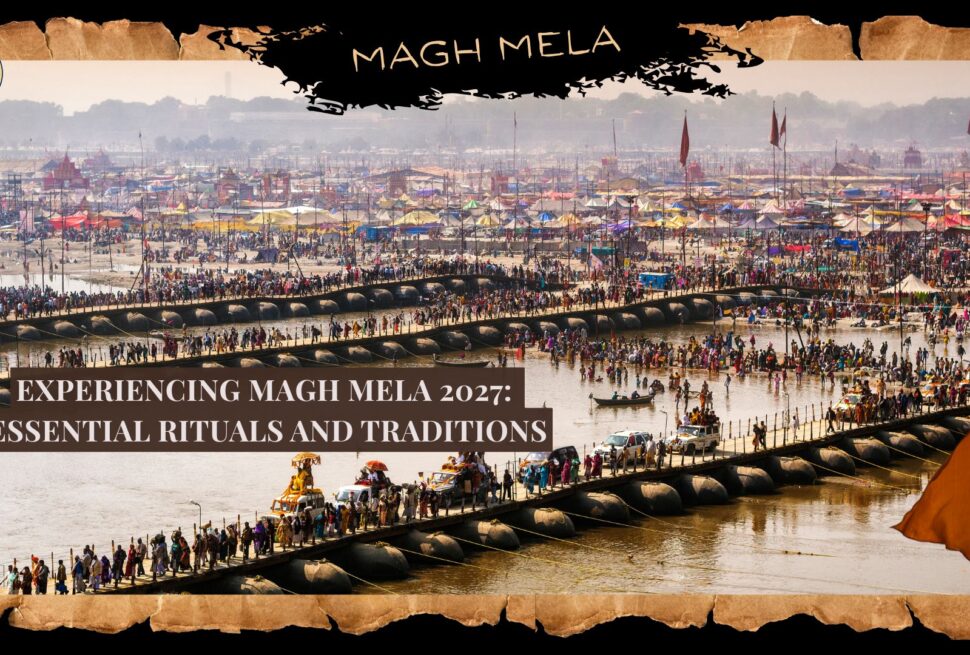
Prayagraj is believed to be the most sacred of the four Kumbh Mela sites. It hosts the Triveni Sangam (“confluence of three”) – the Ganga, Yamuna and mythical Saraswati River. Immersion during Kumbh Mela here is thought to cleanse one of sin and allow enlightenment. The only city to host the Maha Kumbh (every 144 years)
2. Haridwar
Haridwar is where holy river Ganga first flows into the plains after emerging from the mountains of Himalayas. The religious bathing ghat at Har Ki Pauri is centre of the Kumbh Mela celebrations attended by millions of pilgrims.
3. Ujjain
Located on the banks of the Shipra River, Ujjain is one of Hinduism’s seven sacred cities. The Kumbh Mela held here is known as the Simhastha Kumbh Mela, celebrated when specific planetary alignments occur.
4. Nashik
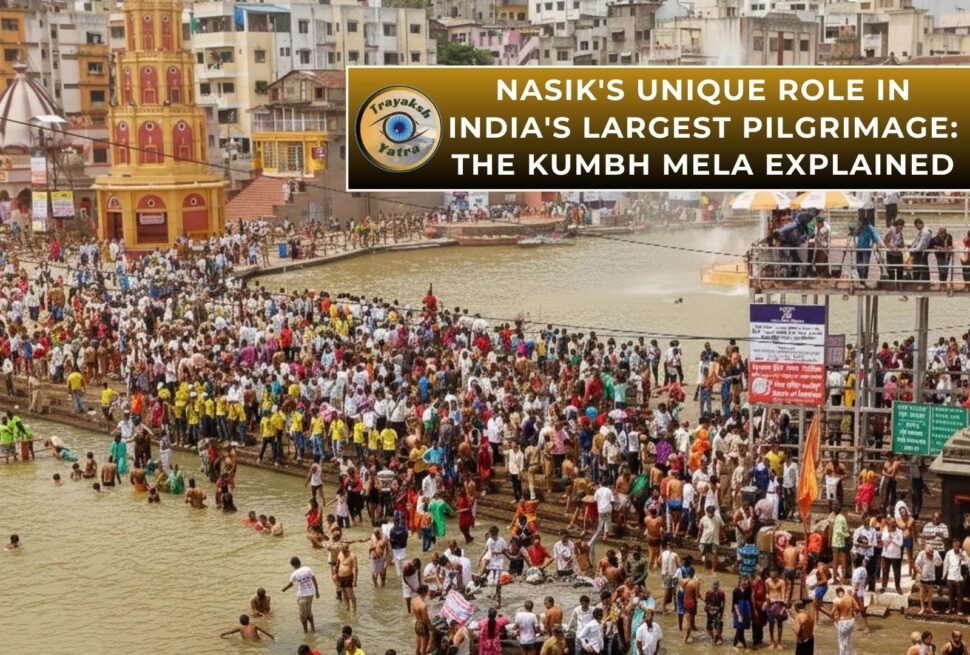
Nashik hosts the Kumbh Mela along the Godavari River, one of India’s holiest rivers. Also known as Simhastha Kumbh when held here. The sacred bathing ceremonies take place mainly at Ram Kund, an important pilgrimage site associated with the Ramayana.
Together, these four sacred places symbolize the spiritual legacy of the Kumbh Mela and continue to attract millions of pilgrims, saints, and visitors from around the world.
UNESCO Recognition
In 2017, UNESCO recognized the Kumbh Mela by formally inscribing it on its Representative List of the Intangible Cultural Heritage of Humanity. This recognition has placed it on par with traditions such as Yoga, Vedic chanting, and Indian classical dance forms.
UNESCO’s recognition has highlighted the Kumbh Mela as an event that transcends caste, class, and regional identities. It stands as a rare example of a living tradition that has endured for over a thousand years and continues to grow. Furthermore, this recognition acknowledges the magnificent arrangements made to safely host millions of people, describing it as an unparalleled example of collective human organization.
Next Kumbh Mela/Ardh Kumbh Mela 2027 with Upcoming Dates
If you are planning to visit the Kumbh Mela, here are the details of the confirmed events:
Haridwar Ardh Kumbh Mela 2027
| 14th January | Makar Sankranti (Snan Start) |
| 06th February | Mauni Amavasya |
| 11th February | Basant Panchami |
| 20th February | Magh Purnima |
| 06th March | Mahashivratri (Amrit Snan) |
| 08th March | Somvati Amavasya (Amrit Snan) |
| 14th April | Mehs Sankranti (Amrit Snan) |
| 20th April | Chaitra Purnima (Closing Bath) |
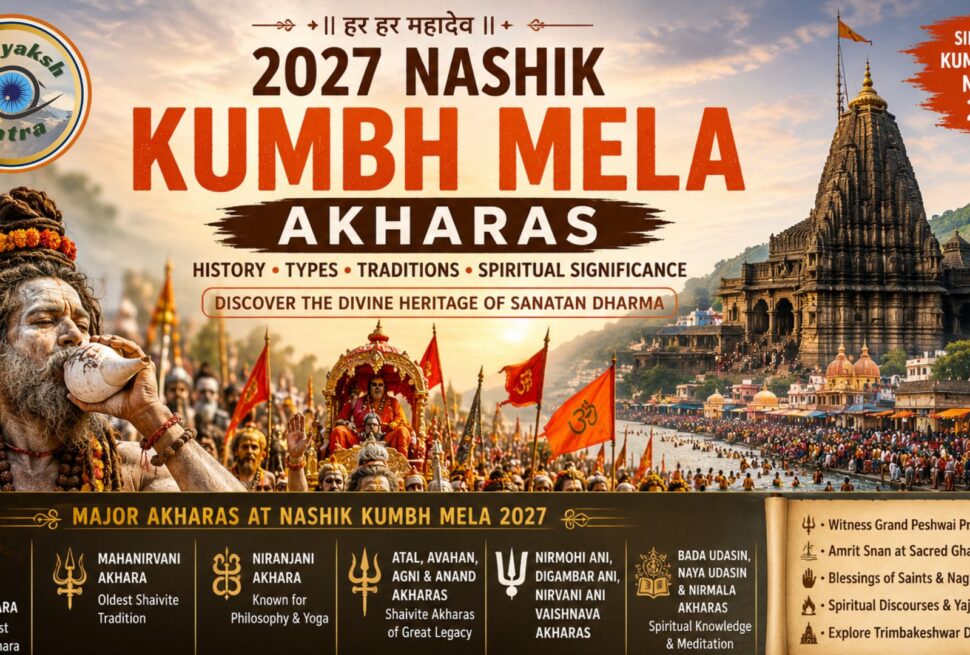
Nashik Simhastha Kumbh 2027
Pilgrims planning to participate on the holy bathing dates can pre-book the Nashik Kumbh pilgrimage tour for an organized spiritual journey.
| Snan Date | Day | Occasion | Location |
| 31 October 2027 | Saturday | Flag Hosting | Nasik |
| July, Aug & Sep | All Days | Main Snan Months | Masik & Trimbakeshwar |
| 2 August 2027 | Monday | First Amrit (Shahi) Snan – Ashadh Somvati Amavasya | Nashik & Trimbakeshwar |
| 31 August 2027 | Tuesday | Second Amrit (Shahi) Snan – Shravan Amavasya | Nashik & Trimbakeshwar |
| 11 September 2027 | Saturday | Third Amrit (Shahi) Snan – Vaishnava Akharas | Ramkund, Nashik |
| 12 September 2027 | Sunday | Third Amrit (Shahi) Snan – Shaiva Akharas | Kushavarta Kund, Trimbakeshwar |
Ujjain Kumbh Mela (Simhastha) 2028 Snan Dates
The Ujjain Simhastha Kumbh Mela 2028 is expected to be held from 27 March 2028 to 27 May 2028 on the banks of the sacred Shipra River in Ujjain. Current schedules published by organizers and planning authorities indicate the following major Shahi (Royal) Snan dates.
| Shahi Snan | Date | Day | Occasion |
| First Shahi Snan | 9 April 2028 | Sunday | Chaitra Purnima |
| Second Shahi Snan | 23 April 2028 | Sunday | Vaishakh Amavasya |
| Third Shahi Snan | 8 May 2028 | Monday | Vaishakh Purnima |
How Is Kumbh Mela Celebrated Today?
Today, Kumbh Mela stands as one of the world’s largest spiritual gatherings and draws millions of devotees, saints, and visitors.
- Devotees take a holy dip in the sacred river to seek spiritual purification and blessings.
- Saints and religious leaders conduct prayers, discourses, and spiritual ceremonies.
- Colorful processions of Akharas and holy men are an important part of the festival.
- Pilgrims visit temples, participate in religious rituals, and listen to spiritual teachings.
- Many people perform charity and donation activities, such as distributing food and helping those in need.
- Cultural programs, devotional music, and traditional performances are also organized during the event.Modern facilities, including security, tra
- nsportation, medical services, and digital information centers, help manage the large crowds.
Today, Kumbh Mela continues to be a symbol of faith, devotion, and spiritual unity, bringing people together from across India and the world.
Interesting Facts About the First Kumbh Mela
- There is no confirmed historical founder of the Kumbh Mela.
- Its spiritual inspiration comes from the Samudra Manthan legend.
- River pilgrimages in India predate the formal Kumbh Mela by many centuries.
- Adi Shankaracharya is traditionally credited with strengthening Hindu monastic institutions that later became closely associated with the festival.
- Historical records of large religious gatherings at Prayagraj date back to the 7th century CE.
Today, people recognize Kumbh Mela as one of the largest religious gatherings in the world, widely celebrated for its scale and devotion. For those planning to attend the upcoming Nashik event, advance Nashik camp/hotels stay reservations can help ensure a comfortable and convenient pilgrimage experience.
Conclusion
The Kumbh Mela was not founded by a single individual on a specific date. Instead, it emerged over centuries from ancient Hindu pilgrimage traditions inspired by the legend of the Samudra Manthan. While Adi Shankaracharya is widely respected for organizing Hindu monastic traditions and influencing the Akharas that participate in the festival, the Kumbh Mela itself is best understood as the result of a long historical and spiritual evolution.
Today, it remains a living tradition that unites mythology, history, faith, and culture, continuing to inspire millions of devotees from around the world.
FAQ
1. Who started the Kumbh Mela?
Ans. No single person started it. Ancient mythology gives it its roots, and Adi Shankaracharya organized it into a structured event around the 800s CE.
2. When was the first Kumbh Mela held?
Ans. There’s no exact date. The earliest written record is from 644 CE, documented by the Chinese traveler Hsuan Tsang.
3. What Is the History of the First Kumbh Mela?
Ans. The first Kumbh Mela traces its roots to Samudra Manthan, with the earliest recorded gathering at Prayagraj in 644 CE.
4. Where was the first Kumbh Mela held?
Ans. The earliest recorded gathering took place at Prayag (modern-day Prayagraj), where rivers meet together.
5. Why is Kumbh Mela celebrated?
Ans. Moreover, the people celebrate it to remember the mythological story of nectar spilling at four sacred places and believe bathing there cleans sins and brings spiritual blessings. Therefore, it is highly sacred.
6.How often does Kumbh Mela take place?
Ans. Firstly, it follows a 12-year cycle, rotating between four holy locations: Prayagraj, Haridwar, Nashik, and Ujjain. Finally, visit holy places in India with Trayaksh Yatra trips.