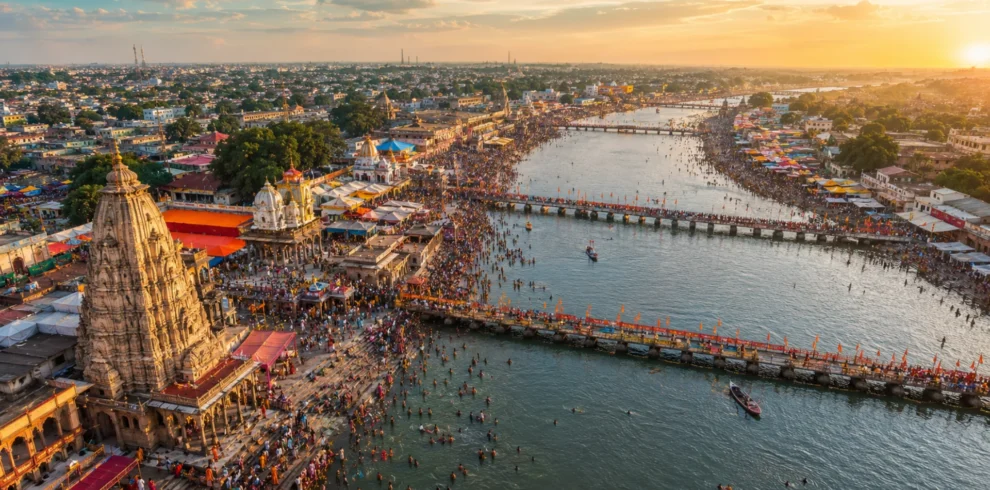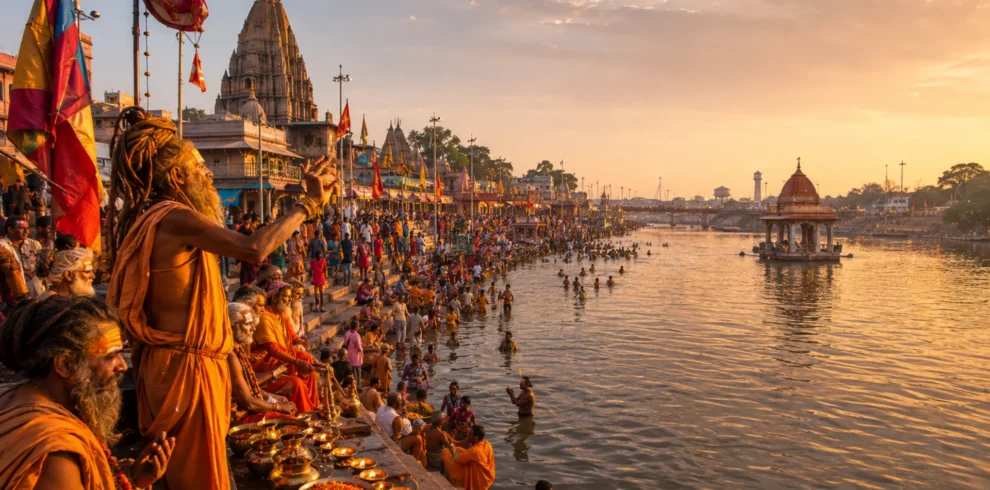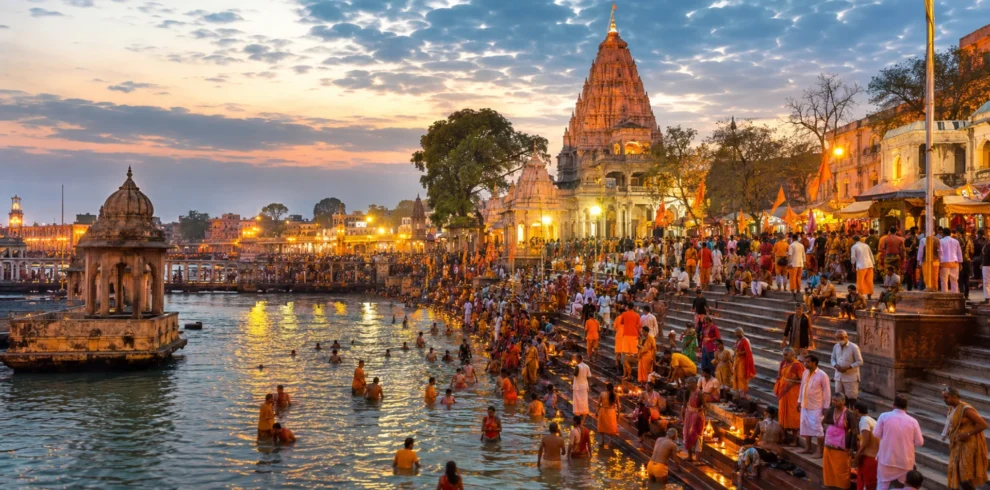
Ujjain Simhastha Kumbh Mela 2028 is expected to be one of India’s most significant spiritual gatherings, bringing together millions of devotees, saints, sadhus, Naga Sadhus, Akharas, spiritual leaders, and travelers from across India and around the world.
Held in the ancient sacred city of Ujjain in Madhya Pradesh, Simhastha is closely associated with the holy Shipra River, sacred bathing rituals, the revered Mahakaleshwar Jyotirlinga, and the centuries-old traditions of Hindu ascetic orders.
A pilgrimage to Ujjain during Simhastha provides one with an unparalleled spiritual treat blended with faith, belief, spirituality, bhakti, culture and tradition. Right from the sacred dip in Shipra, the visit to Mahakaleshwar Temple to watching the magnificent Akharas & Naga Sadhus’ processions your spiritual journey can become an experience never to forget.
If you are planning to visit Ujjain Simhastha Kumbh Mela 2028, Trayaksh Yatra will help you understand the fair, its spiritual significance, important dates, main attractions, travel plan, accommodation, safety tips and tour package options. Or will help you choose the package as per your requirement in your budget.
What Is Ujjain Simhastha Kumbh Mela?
Ujjain Simhastha Kumbh Mela is one of the four major Kumbh gatherings traditionally held at four sacred locations in India: Prayagraj, Haridwar, Nashik-Trimbakeshwar, and Ujjain.
The word “Simhastha” comes from two Sanskrit words- “Simha” which means lion and “sthapana” which means to establish or put in place. Thus, since Lord Shiva whom this Mahakal Jyotirlinga symbolizes is fondly called as the king of all lords or “Mahakal” the festival taking place here is called Simhastha meaning lion-like in strength, power and courage.
The festival also brings together different Akharas and spiritual traditions. Saints, ascetics, and Naga Sadhus participate in religious processions and ceremonial bathing rituals, creating one of the most spectacular spiritual scenes in India.
History and Significance of the Kumbh Mela in Ujjain
Kumbh Mela (Simhastha Kumbh Mela) is one of the largest and oldest festivals in India which attracts millions of Hindu pilgrims to take a holy dip. It occurs once in 12 years at four different places – Haridwar, Prayagraj, Nashik and Ujjain on rotation basis. Maha kumbh mela is specially important for holy city of Ujjain.
As per legend and scriptures, Ujjain is one among the seven cities where drops of Amrit spilled over from the pot suspended in the sky during the ocean churning by the gods and demons. Therefore, bathing in sacred rivers of Ujjain during the Kumbh Mela holds great significance and is thought to cleanse the devotee of his sins.
Historical proof for Kumbh Mela first begins to appear from 629 AD when the Chinese traveller Hiuen Tsang visited India during the reign of King Harshavardhan. He mentions that during his visit a great fair was held at Prayag where thousands of people took holy dips on auspicious days as per astrological positions and the beliefs associated with it. Kumbh melas didn’t gain its pan India popularity until Akbar attended it with his courtiers.
Ujjain Kumbh Mela (Simhastha) 2028 – Complete Bathing Dates with Hindu Tithis
The Ujjain Simhastha Kumbh Mela 2028 is expected to be held from 27 March 2028 to 27 May 2028 on the banks of the sacred Shipra River in Ujjain, Madhya Pradesh. The event will feature three majors Shahi (Amrit) Snans along with several important Parva Snans.
| Date | Day | Hindu Tithi / Festival | Significance |
| 27 March 2028 | Monday | Chaitra Shukla Pratipada (Gudi Padwa / Hindu New Year) | Opening of Simhastha Mela |
| 29 March 2028 | Wednesday | Chaitra Shukla Tritiya (Gauri Puja) | Auspicious Bath |
| 3 April 2028 | Monday | Ram Navami | Holy Bath |
| 7 April 2028 | Friday | Shukla Pradosh Vrat | Sacred Bath |
| 9 April 2028 | Sunday | Chaitra Purnima & Hanuman Jayanti | First Shahi (Amrit) Snan |
| 13 April 2028 | Thursday | Mesha Sankranti | Major Parva Snan |
| 20 April 2028 | Thursday | Varuthini Ekadashi | Sacred Bath |
| 23 April 2028 | Sunday | Special Royal Bath Day | Second Shahi (Amrit) Snan |
| 27 April 2028 | Thursday | Vaishakh Amavasya | Highly Auspicious Bath |
| 1 May 2028 | Monday | Vaishakh Shukla Ekadashi (Mohini Ekadashi) | Parva Snan |
| 5 May 2028 | Friday | Vaishakh Shukla Purnima Festival Period | Holy Bath |
| 8 May 2028 | Monday | Vaishakh Purnima | Third & Final Shahi (Amrit) Snan |
| 15 May 2028 | Monday | Jyeshtha Krishna Panchami | Special Bath |
| 27 May 2028 | Saturday | Closing Ceremony | Conclusion of Simhastha 2028 |
Three Main Shahi (Royal) Snan Dates
- 9 April 2028 – First Shahi (Amrit) Snan (Chaitra Purnima & Hanuman Jayanti)
- 23 April 2028 – Second Shahi (Amrit) Snan
- 8 May 2028 – Third & Final Shahi (Amrit) Snan (Vaishakh Purnima)
Note: The Shahi Snan dates are widely accepted, while the complete Parva Snan calendar and associated tithis may be refined when the official Simhastha Authority publishes the final religious schedule closer to the event.
What Is Amrit Snan at Simhastha?
Amrit Snan, traditionally known as Shahi Snan, is one of the most important events associated with Kumbh traditions. On specially designated auspicious bathing days, members of different Akharas participate in ceremonial processions before taking a sacred bath.
The processions can include:
- Saints and spiritual leaders
- Naga Sadhus
- Akhara members
- Religious flags
- Traditional musical performances
- Devotional chants
- Ceremonial arrangements
The Amrit Snan is both a deeply spiritual ritual and a spectacular cultural experience.
Pilgrims visiting Ujjain during these days should be prepared for very large crowds and should follow all official crowd-management, traffic, and safety instructions.
Why Is Ujjain Simhastha Kumbh Mela Spiritually Important?
Ujjain is one of India’s most ancient and spiritually significant cities. The city has been an important center of religion, culture, astronomy, literature, and learning for centuries.
The spiritual importance of Ujjain Simhastha is connected with several elements:
- The Sacred Shipra River – Shipra is central to pilgrimage in Ujjain. Pilgrims performing rituals and bathing at the ghats of Shipra during Simhastha. Bathing in Shipra is also considered auspicious by pilgrims.
- Mahakaleshwar Jyotirlinga – Ujjain hosts Mahakaleshwar Jyotirlinga, one of the twelve Jyotirlingas of Shiva. Darshan of Mahakaleshwar temple is combined during visit to Ujjain for Simhastha which makes it more pilgrimage for Lord Shiva devotees.
- The Tradition of Kumbh – Kumbh Tradition celebrates the Hindu epic Samudra Manthan (churning of milky ocean) and quest for Amrit (elixir of immortality). Kumbh pilgrimage centers around holy bathing, spiritual practice, congregations and salvation.
- Saints and Akharas – Saints, ascetics, spiritual leaders and Akharas visiting Simhastha is one of its unique features. The involvement of Naga Sadhus and other ascetic traditions contribute towards adding a spiritual and cultural dimension to the festival.
Naga Sadhus at Ujjain Simhastha
Naga Sadhus are among the most recognizable figures associated with the Kumbh Mela tradition. They belong to particular ascetic orders and are known for their renunciation, spiritual discipline, and distinctive appearance.
During Simhastha, Naga Sadhus participate in important religious processions and ceremonial bathing rituals.
Visitors should remember that Naga Sadhus are religious ascetics, not tourist attractions. Anyone wishing to photograph or interact with them should behave respectfully and ask for permission where appropriate.
What Are Akharas?
Akharas are Hindu monastic orders. Akharas serve as ascetic organisations, helping perpetuate yogic traditions, religious scriptures, spiritual doctrines and the Guru–Shishya tradition. Akharas lead religious processions and organize group baths at Kumbh Melas.
Visitors can learn about:
- History of Akharas
- Different Akhara traditions
- Shaiva and Vaishnava traditions
- Role of Akharas in Kumbh
- Naga Sadhu traditions
- Spiritual practices
- Amrit Snan processions
The Akhara traditions are an essential part of understanding the deeper spiritual character of Simhastha.
Mahakaleshwar Jyotirlinga: The Spiritual Heart of Ujjain
No Ujjain pilgrimage is complete without visiting Mahakaleshwar Jyotirlinga. The temple is one of the twelve Jyotirlingas of Lord Shiva and is among the most important religious destinations in Madhya Pradesh. During Simhastha, the demand for Mahakaleshwar darshan can be extremely high.
Visitors planning a temple visit should check:
- Darshan timings
- Bhasma Aarti booking rules
- Entry arrangements
- Dress requirements
- Official booking procedures
- Mobile phone restrictions
- Crowd-management instructions
If you are planning to visit during Simhastha, it is advisable to plan your temple visit well in advance and verify the latest official rules before travelling.
Bhasma Aarti at Mahakaleshwar Temple
The Bhasma Aarti is one of the most famous religious rituals associated with Mahakaleshwar Temple. It is a highly revered early-morning ceremony dedicated to Lord Shiva.
Devotees interested in attending the Bhasma Aarti should check the official booking process and eligibility requirements in advance. During major pilgrimage periods such as Simhastha, demand is expected to be exceptionally high.
Top Places to Visit During Ujjain Simhastha 2028
- Mahakaleshwar Jyotirlinga – The primary spiritual attraction of Ujjain and one of the twelve Jyotirlingas of Lord Shiva.
- Ram Ghat – One of the most prominent ghats along the Shipra River and an important location for religious bathing and rituals.
- Harsiddhi Temple – A revered Shakti temple and an important pilgrimage site in Ujjain.
- Kal Bhairav Temple – A unique and highly respected temple dedicated to Kal Bhairav.
- Mangalnath Temple – A spiritually significant temple associated with Ujjain’s ancient religious and astronomical traditions.
- Sandipani Ashram – A sacred site traditionally associated with the education of Lord Krishna, Balarama, and Sudama.
- Gadkalika Temple – An ancient temple with strong religious significance.
- Chintaman Ganesh Temple – A popular pilgrimage destination dedicated to Lord Ganesha.
- Vedh Shala – The historic astronomical observatory reflects Ujjain’s long-standing association with astronomy and timekeeping.
- Shipra River Ghats – The riverfront ghats become central to the spiritual experience of Simhastha, particularly during major bathing occasions.
How to Reach Ujjain Simhastha Kumbh Mela 2028
By Air – Travelers can fly to nearby airports and continue their journey to Ujjain by road. Indore is an important gateway for travelers arriving by air, with onward transportation available to Ujjain.
By Train – Ujjain Junction is a major railway station and an important entry point for pilgrims. During Simhastha, special trains and additional railway arrangements may be introduced. Travelers should check the latest railway schedules before booking.
By Road – Ujjain is connected by road with several major cities in Madhya Pradesh and neighbouring states.
Popular road connections include:
- Indore
- Bhopal
- Ahmedabad
- Mumbai
- Delhi
- Jaipur
- Kota
During Simhastha, traffic restrictions and diversions may be introduced. Always check the latest official travel advisories before starting your journey.
Where to Stay During Ujjain Simhastha 2028?
Accommodation planning should be one of the first priorities for anyone visiting Ujjain during Simhastha.
Possible accommodation options include:
- Luxury Hotels – Best for travelers looking for premium comfort and private facilities.
- Mid-Range Hotels – Suitable for families and couples looking for comfortable accommodation.
- Budget Hotels – A practical option for pilgrims who want to control travel expenses.
- Dharamshalas – Suitable for travelers looking for simple and economical religious accommodation.
- Guest Houses – Useful for families and groups.
- Tent Camps – May provide a more immersive pilgrimage experience, subject to availability and official arrangements.
Important Booking Tip
Because Simhastha is expected to attract very large crowds, accommodation near major pilgrimage areas may become limited. Travelers should plan accommodation early and verify the exact location, facilities, cancellation policy, and transportation arrangements before booking.
- Book Transportation in Advance: – Book your transportation beforehand so you don’t have any hassle once you reach Ujjain for Kumbh Mela. Whether it’s train/bus tickets, rental car or flights from another city.
- Plan your route: – Ujjain has good connectivity by roads, rail and air networks. Reachable by road/rail/air Easily Reachable. During Kumbh Melo time try to fix your route in advance as due to traffic jam during peak hours it becomes difficult to commute.
Ujjain Simhastha 2028 Tour Packages
Travelers can choose from several types of pilgrimage packages.
- Ujjain Simhastha 2 Nights / 3 Days – Ideal for visitors who want a short spiritual trip covering:
- Simhastha experience
- Shipra River
- Ram Ghat
- Mahakaleshwar Darshan
- Ujjain sightseeing
- Ujjain Simhastha 3 Nights / 4 Days – A relaxed itinerary covering:
- Simhastha
- Mahakaleshwar
- Harsiddhi Temple
- Kal Bhairav Temple
- Mangalnath Temple
- Ram Ghat
- Ujjain Simhastha + Omkareshwar Package – Ideal for devotees who want to combine Simhastha with another major Shiva pilgrimage destination.
- Ujjain + Omkareshwar + Maheshwar Package – A combination of spirituality, temple visits, heritage, and Madhya Pradesh sightseeing.
- Luxury Simhastha Package – May include:
- Premium hotel
- Private vehicle
- Railway station or airport transfers
- Personalized itinerary
- Dedicated travel assistance
- Group Simhastha Package – Ideal for:
- Religious groups
- Families
- Friends
- Senior citizens
- Community groups
| Package Type | Cost (Approx) | Inclusions |
| Budget Package | ₹7,499 – ₹14,999 per person | Shared tents, vegetarian meals, guided rituals |
| Standard Package | ₹19,999 – ₹39,999 per person | Comfortable guesthouses, transport, meals, local sightseeing |
| Luxury Package | ₹59,999 – ₹1,19,999+ per person | 4–5 star hotels, private transport, VIP ritual access, cultural tours |
Travel Services You Can Book
A professional pilgrimage travel company can provide:
- Hotel booking
- Tent accommodation
- Airport transfers
- Railway station transfers
- Private taxi
- Tempo Traveller
- Group bus
- Ujjain sightseeing
- Mahakaleshwar travel assistance
- Omkareshwar tours
- Customized itineraries
- Family packages
- Senior citizen packages
- Group tours
- Meal arrangements
- Local guides
- 24×7 travel assistance
Trayaksh Yatra offers you packages that fit your budget, along with all these services.
Ujjain Simhastha 2028 Traffic & Transportation
Managing transportation during a mega pilgrimage event is a major challenge. Travelers should expect that authorities may introduce:
- Traffic diversions
- One-way routes
- Parking zones
- Shuttle services
- Special public transport
- Walking routes
- Railway arrangements
- Crowd-control measures
Preparations for Simhastha 2028 are already involving infrastructure and safety planning, with recent reporting highlighting measures such as new ghats, bridges, crowd-management improvements, and technology-supported emergency response. These arrangements may continue to evolve before the event.
For your travel website, it is best to maintain a regularly updated “Latest Traffic & Transport Updates” page rather than publishing fixed information too early.
Ujjain Simhastha 2028 Safety Tips
The Kumbh Mela attracts enormous crowds, so preparation is essential.
Follow these tips:
- Keep your identification documents safe.
- Carry only essential belongings.
- Keep your mobile phone and power bank charged.
- Save emergency contact numbers.
- Stay hydrated.
- Wear comfortable footwear.
- Follow police and administration instructions.
- Do not enter restricted areas.
- Keep children and elderly family members close.
- Establish a meeting point with your group.
- Avoid unnecessary crowding on peak bathing days.
- Follow river-safety instructions.
- Do not spread unverified information.
- Respect religious ceremonies and traditions.
How to Respect Simhastha Traditions
Ujjain Simhastha is a religious gathering first and a tourist experience second.
Visitors should:
- Dress respectfully.
- Follow temple rules.
- Ask permission before photographing saints.
- Avoid disturbing religious ceremonies.
- Respect Akhara traditions.
- Do not touch religious objects without permission.
- Keep the ghats clean.
- Follow queues and crowd instructions.
- Avoid littering.
- Respect local residents and pilgrims.
A respectful attitude helps preserve the spiritual atmosphere of the festival.
Best Time to Visit Ujjain Simhastha 2028
The best time depends on your purpose.
- For Amrit Snan Experience – Choose one of the major bathing dates, but be prepared for exceptionally large crowds.
- For a More Comfortable Pilgrimage – Consider visiting outside the peak bathing dates, when crowd levels may be comparatively manageable.
- For Mahakaleshwar Darshan – Plan your temple visit carefully and check the latest official booking and entry procedures.
- For Sightseeing – Add at least one or two extra days to explore Ujjain’s temples and nearby attractions.
How Many Days Are Enough for Ujjain Simhastha?
- For a basic pilgrimage experience, 2 to 3 days can be sufficient.
- For a more relaxed experience covering Simhastha, Mahakaleshwar, and major Ujjain temples, 3 to 4 days is better.
- For a broader Madhya Pradesh pilgrimage including Omkareshwar and Maheshwar, consider 5 to 7 days.
Your ideal itinerary depends on:
- Bathing date
- Darshan requirements
- Accommodation location
- Crowd conditions
- Transportation
- Additional destinations
Ujjain Simhastha 2028 for Senior Citizens
Trayaksh Yatra Company has carefully planned the trip for the elderly to ensure they do not face any inconvenience during this Kumbh Mela.
Recommended arrangements include:
- Comfortable hotel
- Private transportation
- Minimal walking
- Flexible sightseeing
- Medical support
- Regular rest breaks
- Avoiding peak crowd periods where possible
A customized pilgrimage package can make the journey more comfortable for elderly travellers.
Why Should You Visit Ujjain Simhastha 2028?
Ujjain Simhastha offers a rare opportunity to experience India’s living spiritual traditions at an extraordinary scale.
The journey combines:
- Sacred bathing
- Mahakaleshwar Jyotirlinga
- Ancient temples
- Shipra River
- Akharas
- Naga Sadhus
- Spiritual discourses
- Religious processions
- Indian culture
- Devotional experiences
For a spiritual traveller, Simhastha can become much more than a holiday. It can be a journey of faith, reflection, devotion, and cultural discovery.
Conclusion
Ujjain Simhastha Kumbh Mela 2028 is expected to bring together millions of devotees and spiritual seekers in one of India’s most sacred pilgrimage cities.
From the holy waters of the Shipra River and the spiritual presence of Mahakaleshwar Jyotirlinga to the grand processions of Akharas and the traditions of Naga Sadhus, Simhastha offers a unique window into India’s ancient spiritual heritage.
Whether you are traveling alone, with family, as part of a religious group, or through a customized pilgrimage package, early planning can make your journey more comfortable.
Before booking your trip, verify the latest official dates, bathing schedules, transportation arrangements, temple procedures, accommodation availability, and government guidelines.
BOOK NOW! Choose the ultimate Ujjain Kumbh Mela package 2028 and immerse yourself in the divine aura of this unmatched gathering! Take advantage of Trayaksh Yatra’s top-notch Kumbh Mela package. Contact us for further details. Travelers can also opt for Trayaksh Yatra’s Nashik Kumbh Mela package 2027, Haridwar Ardh Kumbh Mela 2027 and Prayagraj Kumbh Mela.
Frequently Asked Questions
1. When is Ujjain Simhastha Kumbh Mela 2028?
2. What are the major Amrit Snan dates?
3. Where is Simhastha Kumbh Mela held?
4. What is the significance of the Shipra River?
5. Is Mahakaleshwar Jyotirlinga part of the Simhastha pilgrimage?
6. Who are Naga Sadhus?
7. How many days should I spend in Ujjain?
8. Should I book accommodation in advance?
9. How many days in advance can I book the Simhastha tour package?
Take a look below at our most popular itineraries for a memorable trip to Ujjain.