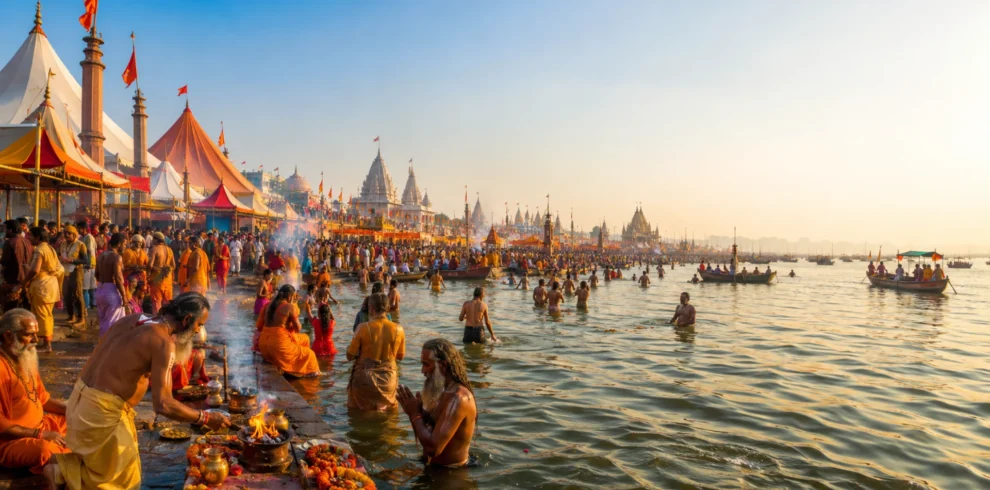
Magh Mela is one of the most important annual Hindu religious gatherings in India, held at the sacred Triveni Sangam in Prayagraj, Uttar Pradesh. Every year, millions of devotees, pilgrims, saints, sadhus, Kalpvasis, and spiritual seekers come to Prayagraj to take holy baths, perform religious rituals, practice meditation, and spend time in spiritual devotion.
Unlike the Kumbh Mela, which takes place periodically, Magh Mela is an annual pilgrimage tradition. It is held during the Hindu month of Magh, generally corresponding to January and February.
The festival is especially famous for Sangam Snan, Kalpvas, spiritual discourses, religious gatherings, Akhara traditions, and the peaceful yet deeply devotional atmosphere along the banks of the Ganga and Yamuna.
This complete guide explains the history, mythology, spiritual importance, rituals, Kalpvas tradition, important bathing days, places to visit, travel information, accommodation, safety tips, and Magh Mela tour packages.
Introduction to Magh Kumbh Mela in Prayagraj
Magh Mela is an annual Hindu pilgrimage and religious fair held in Prayagraj at the Triveni Sangam. The festival takes place during the Hindu month of Magh and traditionally lasts for approximately 45 days, with important bathing occasions spread throughout the period.
According to the official Prayagraj district tourism information, the annual Magh Mela begins around Makar Sankranti and features important bathing dates over a period of about 45 days. The event includes a temporary tented settlement and arrangements for roads, transport, water, electricity, sanitation, medical services, and policing.
During Magh Mela, devotees gather at the Sangam to:
- Take holy baths
- Perform religious rituals
- Practice meditation
- Attend satsangs
- Listen to spiritual discourses
- Perform charity
- Participate in bhajans and kirtans
- Observe Kalpvas
- Visit temples and pilgrimage sites
The Mela creates a temporary spiritual city on the riverbanks of Prayagraj.
Where Is Magh Mela Held?
Magh Mela is held in Prayagraj, Uttar Pradesh, primarily around the sacred Triveni Sangam. The Sangam is traditionally believed to be the meeting point of three sacred rivers:
- Ganga
- Yamuna
- Saraswati
Traditionally though, Saraswati, though invisible, is believed to meet them at the confluence. This site is considered as one of the holiest Hindu pilgrimage sites. The official portal of tourism of Prayagraj states that “Triveni Sangam is a unique confluence considered most sacred. Prayagraj is one of the most important pilgrimage centres in India.”
History of Magh Kumbh Mela
The tradition of gathering at Prayagraj during the month of Magh is centuries old. Prayagraj has traditionally been known as Prayag and Tirthraj, meaning the “King of Pilgrimage.” The sacred Sangam has long attracted pilgrims who come to perform religious rituals and bathe in the holy rivers.
Over time, the annual Magh pilgrimage developed into a large religious gathering involving:
- Pilgrims
- Saints
- Sadhus
- Religious teachers
- Kalpvasis
- Akharas
- Spiritual organizations
The modern Magh Mela combines these ancient religious traditions with temporary infrastructure and administrative arrangements to accommodate large numbers of visitors.
The Prayagraj Mela Authority was established under Uttar Pradesh legislation to organize and administer major mela events, including Magh Mela, Kumbh Mela, and Maha Kumbh Mela.
Spiritual Significance of Magh Kumbh Mela
Magh Mela is deeply connected with the Hindu belief in the spiritual importance of bathing at sacred river confluences.
Devotees believe that taking a holy bath during the auspicious month of Magh can help with:
- Spiritual purification
- Removal of negative influences
- Religious merit
- Self-discipline
- Devotion
- Inner peace
For many pilgrims, Magh Mela is not simply a festival. It is a period of spiritual practice and personal transformation.
The atmosphere at the Sangam is filled with:
- Mantras
- Bhajans
- Aartis
- Meditation
- Religious discussions
- Satsangs
- Charity
- Community service
The experience can be especially meaningful for visitors who want to understand India’s living spiritual traditions.
What Is Sangam Snan?
Sangam Snan means taking a sacred bath at the Triveni Sangam. It is the central religious practice of Magh Mela. Pilgrims traditionally arrive at the riverbanks, offer prayers, and take a holy dip in the sacred waters. Many devotees believe that bathing at the Sangam during auspicious occasions can bring spiritual purification and religious merit.
Visitors should always follow the instructions of local authorities regarding:
- Designated bathing areas
- River safety
- Crowd movement
- Barricades
- Boat operations
- Bathing timings
Important Snan Days During Magh Mela
Each day during the mela has specific significance. The most auspicious dates attract millions of devotees eager to immerse themselves in holy waters. The exact dates of Magh Mela change every year according to the Hindu lunar calendar. Important bathing occasions generally include:
- Paush Purnima – Often regarded as the beginning of the major Magh pilgrimage period and an important bathing occasion.
- Makar Sankranti – One of the most important bathing festivals during the Magh period.
- Mauni Amavasya – A highly significant day associated with silence, spiritual discipline, meditation, and sacred bathing.
- Basant Panchami – An important Hindu festival celebrated during the Magh period.
- Maghi Purnima – One of the most significant bathing occasions and traditionally associated with the conclusion of many Kalpvas observances.
- Maha Shivratri – Depending on the annual calendar and Mela schedule, Maha Shivratri may mark the concluding phase of the pilgrimage period.
The exact dates should always be checked from official announcements for the specific year you plan to visit.
What Is Kalpvas?
Kalpvas means living as an ascetic or holy person for periodical fixed time by bathing daily in the Holy Ganges. Thousands of Sadhus take bath and perform Kalpvas at banks of river Ganges in Magh Mela. During Kalpvas devotees live in tents or huts for one month.
A Kalpvasi is a devotee who follows a disciplined spiritual lifestyle during the Magh period, traditionally staying near the Sangam.
Kalpvas generally involves:
- Regular sacred bathing
- Meditation
- Prayer
- Fasting or simple food
- Self-discipline
- Spiritual discourses
- Charity
- Bhajan and kirtan
- Simple living
For many devotees, Kalpvas is a deeply personal spiritual practice. The temporary settlements along the Sangam become homes for Kalpvasis during their period of devotion.
The official Prayagraj tourism information notes that many pilgrims stay in temporary houses or tents near the Sangam and spend the month of Magh in prayer and religious observance.
Magh Mela and Akharas
Akharas are traditional Hindu monastic and ascetic organizations. During the broader Kumbh tradition, Akharas have a prominent role in ceremonial processions and sacred bathing. Magh Mela also attracts saints, sadhus, spiritual leaders, and religious organizations.
Visitors may encounter:
- Spiritual camps
- Religious discourses
- Satsangs
- Bhajans
- Kirtans
- Bhandaras
- Meditation sessions
The presence of saints and spiritual teachers adds a unique dimension to the Mela.
Naga Sadhus and Magh Mela
Naga Sadhus are associated particularly with the ascetic traditions of the Kumbh and major Hindu pilgrimage gatherings. During Magh Mela, visitors may encounter various ascetics and religious practitioners. Travelers should remember that these are religious individuals, not tourist attractions. If you wish to photograph or interact with a sadhu, always behave respectfully and seek permission when appropriate.
Bhandara and Community Service during Magh Mela
One of the beautiful aspects of Magh Mela is the tradition of Bhandara, where free food is served to pilgrims and visitors.
Various religious organizations, saints, and community groups organize:
- Free meals
- Tea and refreshments
- Food distribution
- Clothing donations
- Medical assistance
These activities reflect the values of Seva, charity, and community service. Visitors should respect the rules of each camp and avoid wasting food.
Magh Mela Tent City
During the Mela Mela, a temporary township is created around the pilgrimage area. Depending on the year, facilities may include:
- Temporary roads
- Electricity
- Water supply
- Toilets
- Sanitation
- Medical facilities
- Police posts
- Fire services
- Public transport
- Parking areas
- Information centres
The official Prayagraj administration describes the Magh Mela infrastructure as including a temporary tented township and arrangements for transport, sanitation, healthcare, policing, and essential services.
Places to Visit During Magh Mela
- Triveni Sangam – The spiritual heart of Magh Mela and the main destination for sacred bathing.
- Bade Hanuman Ji Temple – A famous temple known for its unique reclining idol of Lord Hanuman.
- Akshayavat – A sacred banyan tree associated with ancient Hindu traditions.
- Patalpuri Temple – An ancient underground temple located in the sacred area near the fort.
- Allahabad Fort – A historic landmark located near the Sangam. Entry restrictions may apply to certain areas, so check current access rules.
- Mankameshwar Temple – A revered Shiva temple in Prayagraj.
- Nagvasuki Temple – An important temple dedicated to Nag Vasuki.
- Alopi Shankari Temple – A significant Shakti pilgrimage site.
- Anand Bhavan – A major historical attraction connected with India’s freedom movement.
- Prayagraj Museum – A useful destination for travelers interested in history, art, archaeology, and culture.
How to Reach Prayagraj for Magh Mela
By Air – Prayagraj has an airport with connections to selected Indian cities. Travelers can also consider flying to nearby airports such as Varanasi, depending on flight availability.
By Train – Prayagraj is a major railway hub with connections to many parts of India. During Magh Mela, special train services may be introduced depending on the year’s arrangements.
By Road – Prayagraj has road connectivity with:
- Varanasi
- Lucknow
- Ayodhya
- Kanpur
- Delhi
- Agra
- Gorakhpur
During the Mela, traffic diversions and temporary restrictions may be introduced. Always check current traffic advisories before travelling.
Where to Stay During Magh Mela?
Visitors can choose from several accommodation options.
Hotels – Suitable for families and travelers seeking comfort.
Budget Hotels – Good for pilgrims traveling on a limited budget.
Dharamshalas – Suitable for devotees seeking simple and economical accommodation.
Guest Houses – Useful for families and small groups.
Tent Camps – Temporary tented accommodation may be available near the Mela area.
Kalpvasi Camps – Designed specifically for devotees following the Kalpvas tradition.
Because demand can rise sharply during important bathing dates, advance booking is strongly recommended.
Magh Mela Tour Packages
Travel companies can design different packages according to the traveler’s needs.
- 2 Nights / 3 Days Magh Mela Package – Suitable for a short pilgrimage covering:
- Sangam Snan
- Triveni Sangam
- Major temples
- Local sightseeing
- 3 Nights / 4 Days Magh Mela Package – A more relaxed option covering:
- Sangam
- Magh Mela experience
- Temple visits
- Prayagraj sightseeing
- Prayagraj + Ayodhya Package – Ideal for pilgrims who want to combine Magh Mela with the spiritual attractions of Ayodhya.
- Prayagraj + Varanasi Package – A popular pilgrimage circuit combining the Sangam with the spiritual heritage of Kashi.
- Prayagraj + Ayodhya + Varanasi Package – An ideal option for travelers looking for a complete Uttar Pradesh pilgrimage experience.
- Senior Citizen Magh Mela Package – We Can include:
- Comfortable accommodation
- Private transportation
- Flexible sightseeing
- Reduced walking
- Travel assistance
Best Time to Visit Magh Mela
The best time depends on your purpose.
For Holy Bathing – Visit on an officially announced important Snan date.
For a More Peaceful Experience – Choose a non-peak day when crowds may be comparatively manageable.
For Kalpvas – Visitors following the traditional Kalpvas practice generally stay for an extended period during the Magh month.
For Sightseeing – A 2–3 day visit can provide enough time to experience the Sangam and explore major temples.
Difference Between Magh Mela and Kumbh Mela
Magh Mela | Kumbh Mela |
Held annually in Prayagraj | Held periodically at four locations |
Associated with the Hindu month of Magh | Based on specific astronomical and religious cycles |
Known for Kalpvas and annual pilgrimage | Known for major Kumbh bathing ceremonies |
Usually lasts around 45 days | Major editions can span several weeks |
Held at the Triveni Sangam | Held at Prayagraj, Haridwar, Nashik, or Ujjain |
Large annual gathering | Periodic mega pilgrimage |
According to the official Prayagraj district information, the annual Magh Mela is held every year during the Hindu month of Magh, while the larger Kumbh tradition rotates among four sacred locations; the Magh Mela tradition at Prayagraj is closely connected to the city’s annual pilgrimage cycle.
Magh Mela vs Maha Kumbh Mela
Magh Mela is an annual event, whereas Maha Kumbh is a much larger, periodically occurring Kumbh gathering.
The atmosphere of Magh Mela can be more focused on:
- Kalpvas
- Spiritual discipline
- Daily bathing
- Meditation
- Religious discourses
- Personal devotion
Maha Kumbh, by contrast, attracts an enormous international audience and a much larger concentration of pilgrims, saints, Akharas, and visitors. Both events, however, share the sacred spiritual importance of Prayagraj and the Triveni Sangam.
Conclusion: Why you should experience Magh Mela
Magh Mela in Prayagraj is one of India’s most important annual spiritual gatherings. Held on the banks of the sacred Triveni Sangam, the Mela brings together pilgrims, Kalpvasis, saints, sadhus, spiritual seekers, and visitors from across the country.
The heart of the experience is the sacred bath at the Sangam, but Magh Mela is much more than a bathing festival. It is a period of prayer, meditation, discipline, charity, satsang, and spiritual reflection.
Whether you are planning a short pilgrimage, a family trip, a senior citizen tour, or a complete spiritual journey covering Prayagraj, Ayodhya, and Varanasi, advance planning can make your experience smoother and more comfortable.
Before travelling, always check the latest official announcements regarding Mela dates, Snan dates, traffic restrictions, accommodation, transportation, and safety guidelines.
Plan your Magh Mela pilgrimage and experience the divine atmosphere of Triveni Sangam in Prayagraj with Trayaksh Yatra.
Take a look below at our most popular itineraries for a memorable trip to Magh Kumbh Mela.