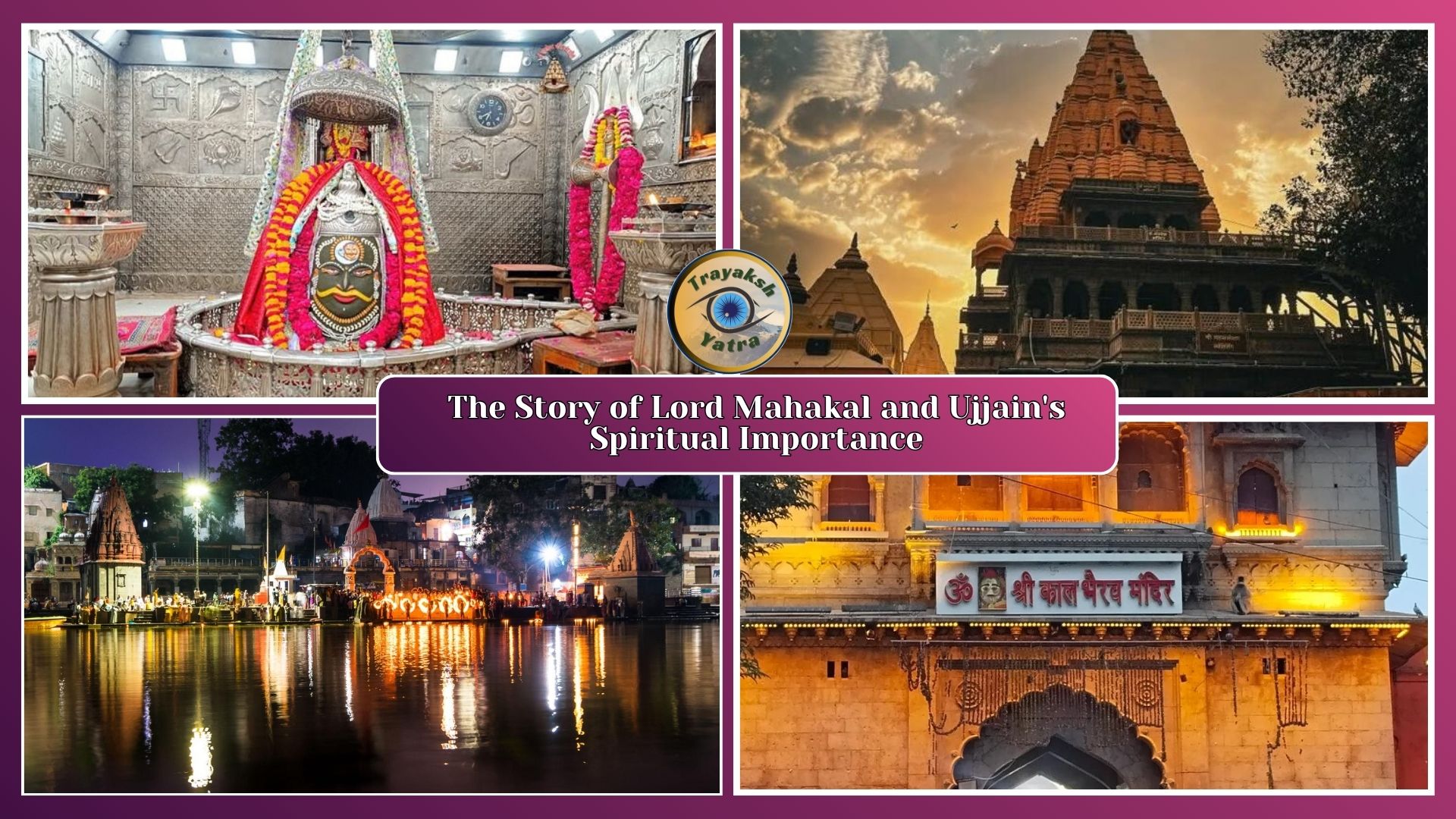
Ujjain is located on the bank of Holy Shipra River and is one of the oldest and holiest cities of India. Considered as one of the seven Moksha- puris (Ujjain), Ujjain’s presiding deity is Mahakaleshwar Jyotirlinga, one of the twelve Jyotirlingas. The story of Lord Mahakal is not just a tale of divine power but also a symbol of protection, devotion, and the victory of righteousness over evil. Every year, millions of devotees visit Ujjain to seek the blessings of Mahakal, the eternal ruler of time and death.
Introduction to the city of Ujjain and its spiritual significance
One among many attractions in Ujjain, Lord Mahakal is the epitome of divinity. Worshiped as one of the most potent Gods in Hindu Mythology, Mahakal signifies time and awareness and beckons thousands to him every year.
The story of Lord Mahakal is intertwined with this sacred land, giving it an aura that transcends ordinary experiences. Whether you are seeking divine blessings or spiritual awakening, embarking on a Mahakaleshwar tour package offers an unforgettable journey through history, culture, and devotion. Let’s explore how this mystical city has shaped countless lives while keeping the spirit of faith alive across generations!
Who Is Lord Mahakal?
The word Mahakal is derived from two Sanskrit words:
- Maha = Great
- Kal = Time or Death
Thus, Mahakal means “The Great Lord of Time and Death.”
Lord Mahakal is considered a fierce and powerful form of Lord Shiva who controls time itself. In Hindu philosophy, time governs all creation and destruction, and Mahakal represents the supreme force beyond time, birth, and death.
The legend of Lord Mahakal and its connection to Ujjain
According to ancient Hindu scriptures, Ujjain was once known as Avantika, a prosperous and spiritually advanced kingdom.
A pious Brahmin lived in the city with his four devoted sons. They were ardent worshippers of Lord Shiva and spent their lives in prayer and meditation.
At that time, a powerful demon named Dushan terrorized the region. Blessed with immense strength, he attacked saints, sages, and devotees, disrupting religious practices and spreading fear throughout the kingdom.
Unable to bear the suffering of the innocent devotees, the Brahmins and sages prayed fervently to Lord Shiva for protection.
Moved by their devotion, Lord Shiva emerged from the earth in a blazing form and manifested as Mahakal. With his divine power, he defeated the demon Dushan and restored peace to the region.
The devotees then requested Lord Shiva to remain in Ujjain forever to protect them. Accepting their prayers, Lord Shiva took residence as Mahakaleshwar Jyotirlinga.
Since then, Mahakal has been worshipped as the guardian deity of Ujjain.
Why Mahakaleshwar Is One of the 12 Jyotirlingas
A Jyotirlinga is a sacred representation of Lord Shiva appearing as an infinite pillar of divine light.
Among the twelve Jyotirlingas spread across India, Mahakaleshwar holds unique significance because:
- It is the only south-facing (Dakshinamukhi) Jyotirlinga.
- It is believed to possess immense spiritual energy.
- Lord Mahakal is worshipped as the ruler of time and death.
- The temple is associated with liberation from fear and negative energies.
Devotees believe that worshipping Mahakal grants spiritual strength, peace, and protection.
Historical background of Lord Mahakal temple in Ujjain
The Mahakaleshwar Temple in Ujjain has a rich historical tapestry woven through centuries. Believed to have been built during the 4th century, it stands as one of the twelve Jyotirlingas dedicated to Lord Shiva.
This temple has undergone many changes throughout the ages. Kings and Emperors would add to its beauty by contributing sculptors that created the pieces on its walls that you can see today. You can see the different styles that the temple has been through due to different dynasties.
The temple witnessed significant events like invasions and natural disasters but endured each challenge with resilience. Its sanctity remained intact through centuries, attracting countless devotees seeking divine blessings.
One of the Seven Sacred Cities
Ujjain is counted among the Sapta Puri, the seven sacred cities believed to bestow salvation (moksha):
- Ayodhya
- Mathura
- Haridwar
- Kashi (Varanasi)
- Kanchipuram
- Dwarka
- Ujjain
Pilgrims believe that visiting Ujjain and worshipping Mahakal helps cleanse past karmas and brings one closer to spiritual liberation.
Significance of Mahakaleshwar Jyotirlinga and its rituals
The Mahakaleshwar Jyotirlinga is one of the twelve revered Jyotirlingas dedicated to Lord Shiva. Situated in Ujjain, this sacred site embodies immense spiritual energy and attracts countless devotees each year.
Temple worship involves distinctive rituals followed for centuries. Offerings of flowers, milk, along with camphor and sandalwood are made daily. Every pooja is performed to seek blessings from Lord Mahakal, who destroys all evils.
Spiritual Importance of Ujjain
- The City of Time and Astrology – Ujjain has long been regarded as the center of Indian astronomy and astrology. Ancient scholars considered Ujjain the prime meridian of India. Many astronomical calculations and calendars were historically based on this sacred city. This connection further strengthens Mahakal’s association with time and cosmic order.
- The Sacred Shipra River – The holy Shipra River flows through Ujjain and is considered highly sacred. Devotees often take a ritual bath in the river before visiting the Mahakaleshwar Temple. It is believed that bathing in the Shipra helps purify the mind and soul.
- The Famous Bhasma Aarti – One of the most unique rituals at Mahakaleshwar Temple is the Bhasma Aarti. Performed before sunrise, this sacred ceremony symbolizes the eternal truth that everything eventually returns to ashes. Thousands of devotees travel from across India to witness this extraordinary ritual, which is considered one of the most powerful forms of Shiva worship.
- Mahakaleshwar During Mahashivratri – The festival of Mahashivratri transforms Ujjain into a vibrant centre of devotion. The temple is beautifully decorated, special prayers are conducted, and lakhs of devotees gather to seek the blessings of Lord Mahakal. The atmosphere during this period is filled with chants of:
“Jai Mahakal!” and “Har Har Mahadev!” create a deeply spiritual experience.
Lessons from the Story of Lord Mahakal
The legend of Mahakal teaches several timeless values:
- Faith can overcome fear.
- Divine protection comes to those who worship sincerely.
- Evil and injustice are ultimately defeated.
- Time is the most powerful force in the universe.
- Spiritual devotion leads to inner peace and strength.
Best Time to Visit Mahakaleshwar Temple
The temple remains open throughout the year, but the most popular times include:
- Mahashivratri Festival
- Shravan Month
- Kartik Month
- Winter Season (October to February)
Early morning visits are especially recommended for those wishing to attend the Bhasma Aarti.
Other sacred sites and temples in Ujjain linked to Lord Mahakal’s story
Ujjain is a treasure trove of spiritual sites that resonate with the legend of Lord Mahakal. One notable location is the Siddhavat, where it’s believed that sacred waters can cleanse one’s sins. This enchanting site draws numerous pilgrims seeking redemption.
Another significant temple is the Harsiddhi Temple dedicated to Goddess Harsiddhi, representing divine energy and strength. Devotees often visit this shrine before heading to Mahakaleshwar, as part of their spiritual journey.
The Kal Bhairav Temple stands as a guardian of Ujjain, embodying fearlessness and protection. Locals regard worshipping at this ancient site as essential for personal safety and prosperity.
Additionally, Chintaman Ganesh Temple offers a unique blend of Ganesha worship intertwined with local folklore linked to Lord Mahakal’s lore. Each corner of Ujjain holds echoes of its rich past, inviting visitors into an immersive experience steeped in devotion and history.
Impact of the worship of Lord Mahakal on local culture and traditions
Worship of Lord Mahakal profoundly shapes the culture and traditions of Ujjain. Devotees flock to the Mahakaleshwar temple, creating a vibrant atmosphere filled with faith and devotion.
Daily rituals at the temple are not just religious acts; they weave a tapestry of communal bonds among locals. Festivals like Maha Shivaratri see immense participation, transforming streets into lively hubs of celebration.
Conclusion: The timeless influence of Lord Mahakal on the spirituality of Ujjain.
The story of Lord Mahakal is a powerful reminder of divine protection, devotion, and the eternal nature of time. For centuries, Ujjain has remained a beacon of spirituality, attracting seekers, saints, and pilgrims from across the world.
A visit to the sacred Mahakaleshwar Jyotirlinga is more than just a pilgrimage—it is a journey into India’s rich spiritual heritage and a chance to experience the divine presence of Lord Mahakal, the timeless guardian of Ujjain.
Visitors flock to Ujjain not just to experience its historical beauty but also to immerse themselves in a profound spiritual journey anchored by the majestic Mahakaleshwar Jyotirlinga. This sacred site has transcended time, drawing devotees from all walks of life who seek solace and blessings.
As one delves deeper into the rituals at the temple or participates in vibrant festivals like Maha Shivaratri, it becomes clear that Lord Mahakal’s influence shapes daily life here. Local customs echo his teachings, fostering a sense of community among worshippers.
FAQs
Why is Lord Shiva called Mahakal?
Lord Shiva is called Mahakal because he is believed to be the supreme ruler of time and death.
Why is Mahakaleshwar Temple famous?
The temple is famous for being one of the 12 Jyotirlingas and for its unique Bhasma Aarti ritual.
Where is Mahakaleshwar Temple located?
It is located in Ujjain, one of India’s holiest cities.
What is special about the Mahakaleshwar Jyotirlinga?
It is the only south-facing Jyotirlinga among the twelve Jyotirlingas in India.
Can visitors attend the Bhasma Aarti?
Yes, devotees can attend the Bhasma Aarti by following the temple’s booking and entry guidelines.