Welcome to our comprehensive *Char Dham Weather Guide for 2026*. Embarking on the Char Dham journey not only offers you spiritual benefits but also treats you to some amazing views of nature. So before you start buckling up your trekking boots to head out on this pilgrimage visit, know the weather conditions here.
The sacred Char Dham Yatra takes pilgrims through the breathtaking Himalayan regions of Uttarakhand, covering the holy shrines of:
- Yamunotri Temple
- Gangotri Temple
- Kedarnath Temple
- Badrinath Temple
Since these temples are located at high altitudes, weather plays a crucial role in planning a safe and comfortable pilgrimage. Understanding the climate before your journey can help you pack correctly, avoid weather-related disruptions, and enjoy a smoother Yatra.
Introduction to the Char Dham Yatra and its significance
Char Dham Yatra is a spiritual journey to some of the most picturesque destinations in India located very high in Himalayas. It consists of four Himalayan shrines Yamunotri, Gangotri, Kedarnath and Badrinath which are worshipped by Hindus across the country. Millions of pilgrims visit Char Dham every year to rejuvenate their souls and experience their mythological past.
Why Weather Matters During Char Dham Yatra
The Char Dham route experiences:
- Sudden temperature changes
- Rainfall and landslides
- Snowfall in higher regions
- Strong mountain winds
- High-altitude weather conditions
Weather can directly affect:
- Road travel
- Helicopter services
- Trekking routes
- Temple accessibility
Understanding the weather patterns in the Char Dham region
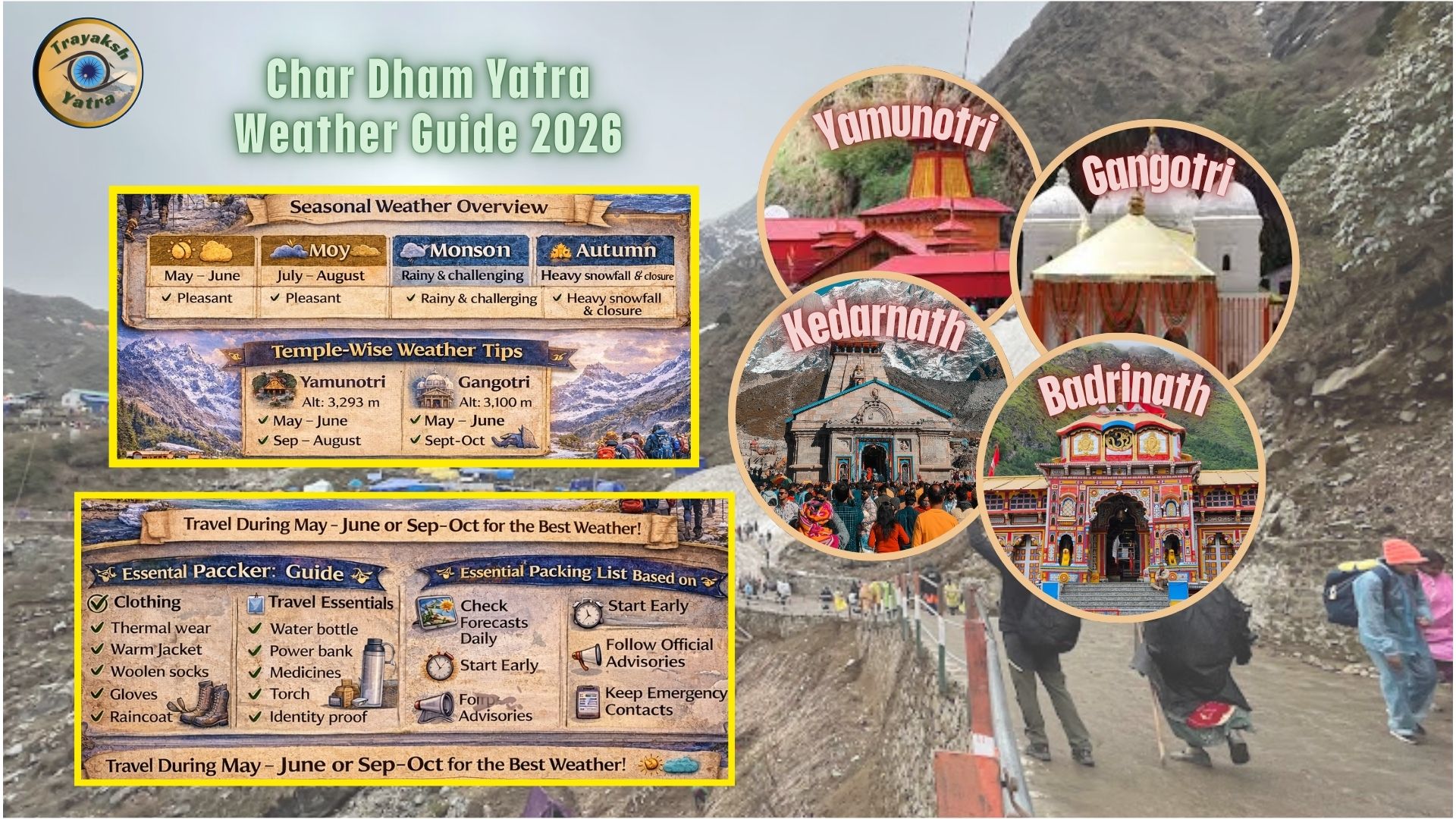
| Season | Months | Weather |
| Summer | May – June | Pleasant and ideal |
| Monsoon | July – August | Rainy and challenging |
| Autumn | September – October | Clear and comfortable |
| Winter | November – April | Heavy snowfall and temple closure |
Summer Season (May–June)
Summer marks the beginning of the Yatra season.
1. Temperature
| Location | Day | Night |
| Yamunotri | 10°C–20°C | 5°C–10°C |
| Gangotri | 8°C–18°C | 4°C–8°C |
| Kedarnath | 5°C–15°C | 0°C–5°C |
| Badrinath | 8°C–18°C | 3°C–8°C |
2. Advantages
- Pleasant weather
- Snow-covered mountain views
- Comfortable trekking conditions
- Maximum travel facilities available
3. What to Carry
- Light woolens
- Windproof jacket
- Sunglasses
- Sunscreen
- Comfortable trekking shoes
Monsoon Season (July–August)
Monsoon brings heavy rainfall across Uttarakhand.
1. Weather Conditions
- Frequent rain showers
- Cloudy skies
- Landslide-prone routes
- Slippery trekking paths
2. Challenges
- Road closures
- Delayed helicopter flights
- Reduced visibility
- Trekking difficulties
3. What to Carry
- Waterproof jacket
- Raincoat
- Waterproof backpack cover
- Extra socks
Autumn Season (September–October)
Many experienced pilgrims consider this the best season for Char Dham Yatra.
1. Temperature
| Location | Day | Night |
| Yamunotri | 8°C–18°C | 2°C–8°C |
| Gangotri | 6°C–16°C | 0°C–5°C |
| Kedarnath | 2°C–12°C | -2°C–4°C |
| Badrinath | 5°C–15°C | 0°C–5°C |
2. Benefits
- Crystal-clear skies
- Beautiful Himalayan views
- Fewer crowds
- Excellent photography opportunities
3. Recommended Clothing
- Heavy jacket
- Thermal wear
- Gloves
- Woolen cap
Winter Season (November–April)
Winter transforms the Char Dham region into a snow-covered landscape.
Conditions
- Heavy snowfall
- Sub-zero temperatures
- Road closures
- Temple closures
The Char Dham temples remain closed during winter, and worship is shifted to designated winter seats.
Temple-Wise Weather Guide
1. Yamunotri (Altitude: Approx. 3,293 meters)
Weather:
- Pleasant in summer
- Rainy during monsoon
- Cold in autumn
Best Time:
- May–June
- September
2. Gangotri Altitude (Approx. 3,100 meters)
Weather:
- Cool even during summer
- Chilly mornings and nights
Best Time:
- May–June
- September–October
3. Kedarnath (Altitude: Approx. 3,583 meters)
Weather:
- Most unpredictable among the Char Dham shrines
- Sudden rain and temperature drops are common
Best Time:
- May–June
- September
4. Badrinath (Altitude: Approx. 3,133 meters)
Weather:
- Comparatively milder
- Pleasant during Yatra season
Best Time:
- May–June
- September–October
Weather Impact on Helicopter Services
Helicopter operations are highly weather-dependent.
Flights may be delayed or cancelled due to:
- Fog
- Rain
- Strong winds
- Poor visibility
Tip:
Always keep one extra day in your itinerary if you are traveling by helicopter.
Essential Packing List Based on Weather
1. Clothing
- Thermal wear
- Warm jacket
- Woolen socks
- Gloves
- Raincoat
2. Travel Essentials
- Water bottle
- Power bank
- Medicines
- Torch
- Identity proof
Health Precautions in Different Weather Conditions
1. During Cold Weather
- Stay hydrated
- Wear layered clothing
- Avoid prolonged exposure to cold winds
2. During Rainy Weather
- Use waterproof footwear
- Avoid slippery shortcuts
- Keep clothes dry
3. At High Altitudes
- Walk slowly
- Take adequate rest
- Consult a doctor if you have heart or respiratory conditions
Safety precautions to keep in mind while travelling during monsoon season
Monsoon season travel can be wonderful. Just be careful of things that rainier roads may conceal. Wet rocks or unexpected landslides are dangers. Pay attention and take care to where you step.
Bring waterproof clothing/shelter. Having a nice rain jacket, a strong umbrella, and a water-proof bag/backpack can go a long way. Monitor weather reports. Keep an eye on how heavy rainfall is expected to be in the Char Dham area through the day.
Always have a safety kit prepared with things like a first-aid kit, some snacks, and a portable charger for your phone. Tell someone your route. And finally, do not travel alone when it’s raining heavily if you don’t have to. Traveling with others will keep you safe, and you can create lifelong memories traveling with family or friends on this spiritual path.
Best Weather for Photography
The most beautiful Himalayan views are usually seen during:
1. September and October
You’ll enjoy:
- Clear skies
- Snow peaks
- Golden sunlight
- Minimal haze
2. Weather Safety Tips
- Check Forecasts Daily
Mountain weather changes quickly.
- Start Early
Morning travel is generally safer and more predictable.
- Follow Official Advisories
Always follow instructions from:
- Local authorities
- Temple administration
- Disaster management teams
- Keep Emergency Contacts
Store important numbers offline in case of network issues.
Conclusion: Plan your perfect Char Dham Yatra with our 2026 weather guide.
Weather is one of the most important factors in planning a successful Luxury Char Dham Yatra. While the Himalayas offer stunning scenery and spiritual serenity, they also bring rapidly changing weather conditions that require proper preparation.
For the safest and most enjoyable experience, plan your journey during May–June or September–October, carry appropriate clothing, monitor weather updates regularly, and keep flexibility in your travel schedule.
With careful planning and weather awareness, your Char Dham Yatra can become a comfortable, safe, and spiritually enriching journey through the majestic Himalayas.
FAQs
Q1. Which is the best weather for Char Dham Yatra?
May–June and September–October offer the most favourable conditions.
Q2. Is monsoon season safe for Char Dham travel?
Travel is possible, but rainfall and landslides can create challenges.
Q3. Does it snow during Char Dham Yatra season?
Snow may still be visible in early season, especially around Kedarnath, but heavy snowfall generally occurs after temple closure.
Q4. Can helicopter flights be cancelled due to weather?
Yes, helicopter services depend heavily on visibility and weather conditions.