Planning a trek to these places won’t let you down as trekking in Chardham offers you mesmerizing views and spiritual bliss along with connecting you with the nature but once you move above higher altitudes the air becomes thinner and the danger of oxygen deprivation creeps up. Hey Trekker, whether you are a pro trekker or preparing for your first trek above 8000ft, it’s important to know how to take care of yourself at high altitudes. In this blog, we will give you some useful tips and advice that will help you take every breath in and enjoy your trekking experience instead of desperately gasping for air. Buckle up and read along to find out how you can keep your lungs happy and healthy while experiencing everything Chardham has to offer.
Introduction to Chardham trekking and the risks of high altitude
If you are preparing for the Chardham Trek in Uttarakhand Himalayas, you have made yourself eligible for lifetime bliss & unforgettable experiences in your life. Envisaging a panoramic view trekking via spiritual hotspots and indulging yourself into captivating cultures are just the tip of iceberg. Trekking through Chardham involves uncertainties too. As beautiful the journey is high altitude trekking always comes with its own share of risks, most common of them being Low Oxygen Levels.
Reaching such heights of glory is accompanied by some changes in your body which might hamper your health. It is better that you are well aware of all these risks before you decide to buy that tempting chardham yatra package or start your journey solo. Once you are prepared to face them, your trip is going to be much smoother and safer. Now you may ask what risks? The risks of altitude sickness my friend. During Chardham yatra, you should know how to take precautions from the shortage of oxygen.
Understanding the effects of lack of oxygen on the body
As you hike at high altitudes, there is less oxygen available. Your body will react in several ways to this. For one you will be out of breath easily while doing normal tasks. Your heart will begin to beat faster pumping blood and oxygen to your muscles.
Symptoms associated with increasing altitude include light headedness and tiredness. Headaches and nausea may also occur due to decreased oxygen saturation in the body. The brain is also vulnerable to effects of altitude. Your mental capacity can decrease causing you to become confused or make poor decisions.
In extreme situations, Oxygen deficiency may cause altitude sickness and may get life-threatening within a short period if unnoticed. Early symptoms could warn you about your body needs to focus on during Chardham Yatra. Awareness can help trekker’s keep themselves alert while exploring the adventure.
Symptoms of Oxygen Deficiency (Altitude Sickness)
Recognizing early symptoms can prevent serious health risks.
- Mild Symptoms (Common)
- Headache
- Shortness of breath
- Dizziness
- Fatigue and weakness
- Loss of appetite
- Difficulty sleeping
- Severe Symptoms (Dangerous)
- Persistent vomiting
- Severe breathlessness (even at rest)
- Chest tightness
- Confusion or disorientation
- Blue lips or fingernails
Severe symptoms may indicate Acute Mountain Sickness (AMS) and require immediate medical attention.
Best Ways to Prevent Oxygen Deficiency During Char Dham Trek
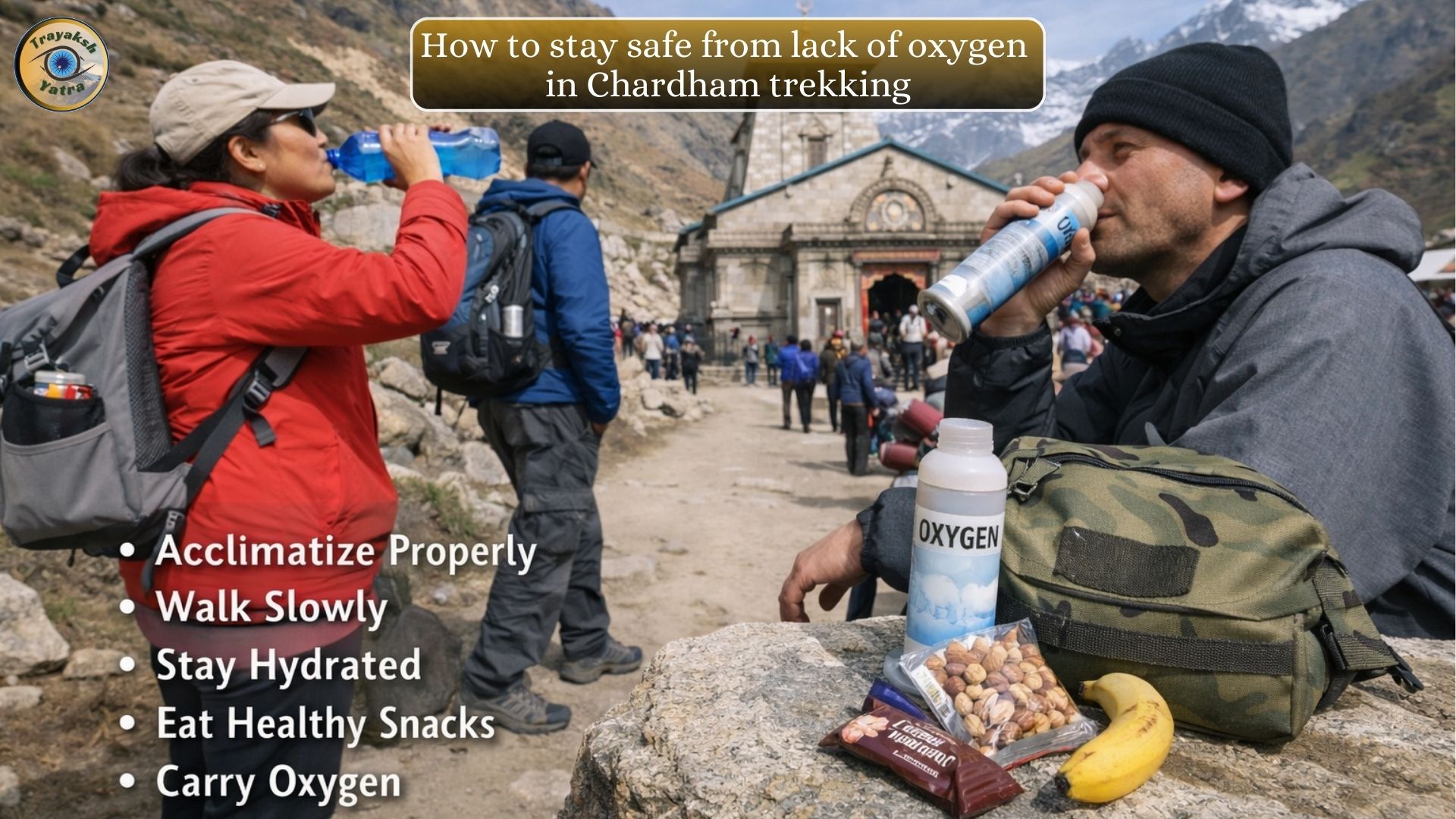
1. Acclimatize Properly
- Spend 1 extra day at intermediate altitude (Guptkashi, Sitapur, or Barkot).
- Avoid rushing the trek. Slow ascent helps your body adjust.
2. Walk Slowly and Steadily
- Maintain a comfortable pace—never rush uphill.
- Take short breaks every 20–30 minutes.
3. Stay Hydrated
- Drink 3–4 liters of water daily.
- Warm fluids like soup, tea, and herbal drinks help maintain oxygen flow.
4. Eat Light but Nutritious Food
- High-energy foods: dry fruits, jaggery, chocolate, bananas.
- Avoid heavy, oily, and junk food.
5. Avoid Alcohol & Smoking
They reduce oxygen absorption and worsen breathing at high altitude.
6. Keep Your Body Warm
Cold weather reduces oxygen circulation. Wear:
- Thermal layers
- Windproof jacket
- Woolen cap & gloves
7. Use Camphor or Oxygen Spray (Optional)
Many trekkers use camphor to ease breathing. Portable oxygen cans are also helpful for emergencies.
Emergency Oxygen & Medical Facilities in Char Dham Route
Medical and oxygen support are available at:
- Kedarnath Base Camp
- Bhimbali & Lincholi
- Yamunotri Trek Route
- Government health camps throughout Yatra season
- Always check oxygen availability before starting the trek.
Preparing for a Chardham trek: physical and mental preparation
Fitness training and Mental Strength Focus: Start training your body for the Chardham trek by including cardio exercises like running, cycling or swimming in your daily routine. Do long hikes to increase your stamina and prepare yourself for different kinds of terrain.
Include flexibility and strength training exercises as well. Yoga may help you with your balance and it can also help you relax and clear your mind before your high-altitude hike. Mentally prepare yourself as well. Picture yourself trekking along and encountering obstacles on the hike. Use mindfulness tricks to stay calm if you start to feel anxious about elevation sickness or challenging terrain.
Medical Preparation Before Char Dham Trek
- Consult your doctor if you have asthma, BP, diabetes, or heart issues.
- Carry essential medicines:
- Diamox (for altitude sickness, only if prescribed)
- Pain relief tablets
- ORS / Glucose powder
- Inhaler (if needed)
Tips for staying safe from lack of oxygen during the trek
Slow down. Allow your body to acclimatize. Don’t climb higher until you feel comfortable at your current elevation. Spend at least one or two days at “false summits.” Don’t push yourself. Do not hurry through steep sections. Take your time. You should move at a comfortable pace.
Hydration is also key in combating altitude sickness. Make sure you drink lots of water on your trek to stay hydrated and help with circulation. Supplemental oxygen can also help if you start to feel worse. It can work wonders if you don’t handle well the lack of oxygen so far from sea level.
Don’t underestimate the importance of listening to your body. If you begin feeling dizzy or tired, take rests when you need to and don’t be afraid to ask fellow trekkers or guides for help when you need it.
– Proper acclimatization techniques
– Managing your pace and hydration
– Using supplemental oxygen
Essential items to pack for a Chardham trek
Planning what to pack for your Chardham Yatra trek can be overwhelming. You want to make sure you have all the essentials to stay safe and comfortable. But what about a portable oxygen concentrator? These can be lifesavers high up in the mountains. Having supplemental oxygen on hand if you need it is always nice.
Have Diamox or some sort of altitude sickness medicine on you. It’ll help alleviate altitude related symptoms. Bring a first aid kit. You never know when a small injury could happen and some medical supplies might come in handy.
Essential Safety Tips for Oxygen Management
- Start trek early morning (fresh oxygen levels)
- Never trek alone
- Avoid overexertion and heavy backpacks
- Sleep well before trekking day
- Keep emergency contacts handy
- Stay positive and calm—panic worsens breathing
- Portable oxygen concentrator
- Diamox or other altitude sickness medication
- First aid kit
What to do in case of severe symptoms of altitude sickness
If you experience severe symptoms of altitude sickness, it’s crucial to act swiftly. These symptoms may include intense headaches, nausea, dizziness, or confusion.
Number one is to descend. Descend to a lower altitude. Get yourself to a lower elevation as soon as possible. This is your best treatment for hypoxia. Descending even 1,000 feet can help you feel better.
Once heading down, communicate with your group what is happening with your body. If you are traveling with a guide or porter, trust in their advice; they understand the mountain and how to descend safely. Drink plenty of water while heading down, but do not push yourself. Stop to rest as necessary, and continue to pay attention to how your body is doing.
What to Do If Oxygen Level Drops During Trek
Immediate Steps
- Stop walking and rest.
- Take deep, slow breaths.
- Drink warm water or glucose.
- Use portable oxygen if available.
When to Seek Help
- If symptoms worsen or breathing becomes difficult
- Visit nearest medical camp or health center immediately
- Descend to lower altitude if advised
High-Risk Groups Who Must Be Extra Careful
- Senior citizens (60+)
- People with lung or heart disease
- First-time high-altitude travelers
- Children under 10 years
These travelers should consider pony, palki, or helicopter services instead of trekking.
Best Time to Avoid Oxygen Problems
The safest months for Char Dham trekking are:
- May – June: Moderate weather, easier breathing
- September – October: Stable climate, lower risk of altitude stress
- Avoid peak monsoon and extreme cold months.
Conclusion Final Thoughts
Char Dham trekking is a divine yet physically demanding journey. Oxygen deficiency is common at high altitude, but with proper preparation, slow trekking, hydration, and awareness, you can stay safe and complete your pilgrimage comfortably.
Take care of your health, listen to your body, and enjoy a safe and spiritually fulfilling Char Dham Yatra.