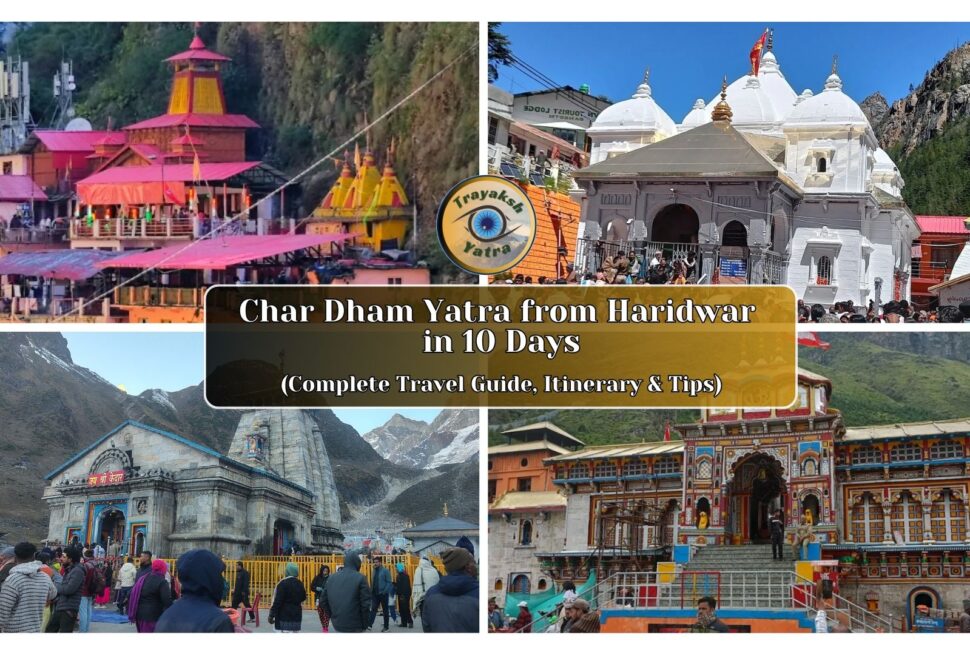
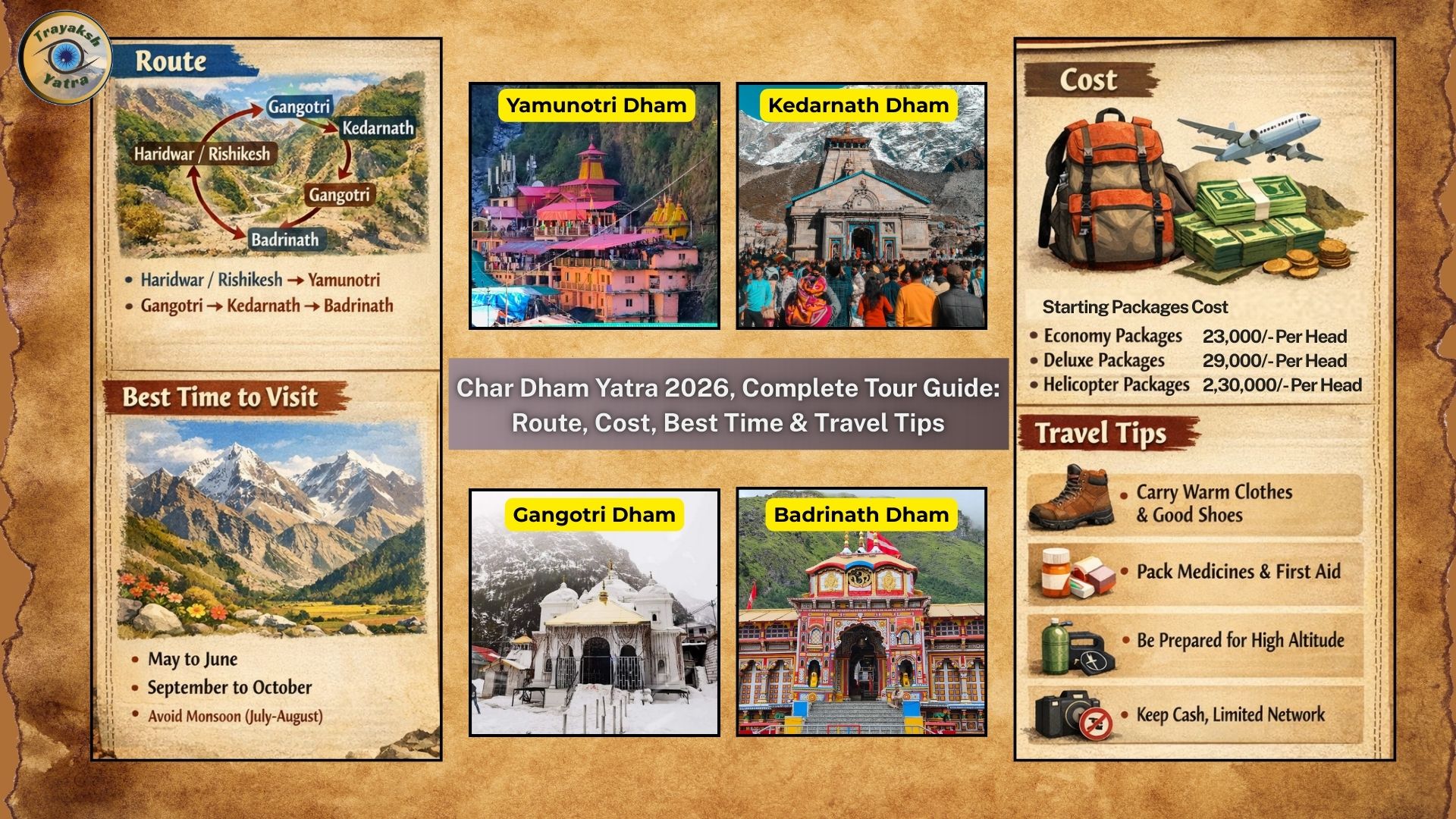
Get set to embark on one of India’s holiest pilgrimages The Char Dham Yatra covering Yamunotri, Gangotri, Kedarnath and Badrinath situated in the lap of Himalayas welcomes travellers and pilgrims from all over the world. Read this comprehensive tour guide for complete details of your upcoming spiritual journey or vacation. Expect everything from detailed routes traversing green valleys and rugged mountains to important travel advice to make your pilgrimage as smooth as possible. We’ll tell you when to go and what your budget should be to make sure you can plan and afford your trip. Read below for a step-by-step guide of this incredible adventure. Each step is filled with incredible nature and spirituality. Sit back and learn about what you need to know for a spiritual Char Dham Yatra
Introduction of Chardham Yatra
- What is Char Dham Yatra?
Char Dham Yatra, also known as the Four Abodes of God, is a significant pilgrimage journey for Hindus. It consists of four holy sites located in the Himalayan region of Uttarakhand in India – Badrinath, Kedarnath, Gangotri, and Yamunotri. The term “Char Dham” literally translates to “Four Abodes” and each site holds immense religious importance for devotees.
- Spiritual Significance of Yamunotri, Gangotri, Kedarnath & Badrinath
Char Dham Yatra Uttarakhand is one of the holiest pilgrimage in Hindu religion. Every single Dhams carries auspicious significance behind. Every visit to these Dham cleanses your soul purify you of your past sins and guides you towards Moksha.
- Why Every Hindu Should Do Char Dham Once in Life
The Char Dham Yatra is not just a journey to four sacred temples it is a soul-purifying pilgrimage that every Hindu is encouraged to undertake at least once in their lifetime. Rooted deeply in Hindu scriptures and traditions, this yatra represents the ultimate spiritual calling.
Importance of Char Dham Yatra in Hinduism
- Connection of Char Dham Yatra with Moksha
Moksha in Hinduism is considered to be the ultimate objective of human life, which is the release of a soul from the continuous cycle of life and death and reincarnation. Char Dham Yatra is one of the holiest pilgrimages that help you achieve this supreme emancipation.
- Adi Guru Shankracharya’s Role
It was Adi Shankaracharya who revived the tradition of Char Dham Yatra and gave it proper structure. The revered Hindu philosopher and saint of the 8th century organised these Himalayan shrines which otherwise were inaccessible into ONE pilgrimage circuit for the Hindus to attain moksha. During his era, Hinduism was under division. To rejuvenate the glory of temples and travel circuits, Adi Shankaracharya journeyed throughout India and reopened many pilgrimage routes such as Yamunotri, Gangotri, Kedarnath and Badrinath as a group pilgrimage instead of separate journeys.
- Mythological Stories Behind Each Char Dham
Each of the four Char Dhams is deeply rooted in Hindu mythology. These sacred sites are not just places of worship but living legends where gods, sages, and divine events shaped the spiritual history of India.
Char Dham Yatra Route Order
- Traditional route sequence:
- Yamunotri – The Legend of Goddess Yamuna:- According to Hindu mythology, Goddess Yamuna is the daughter of Surya Dev (Sun God) and the sister of Yama, the God of Death. She descended to earth to purify humanity.
- Gangotri – Descent of Goddess Ganga:- Gangotri is associated with the famous legend of King Bhagirath, who performed severe penance to bring the celestial river Ganga down to earth to liberate his ancestors.
- Kedarnath – The Pandavas and Lord Shiva:- Kedarnath is closely linked with the Pandavas from the Mahabharata. After the Kurukshetra war, they sought Lord Shiva’s forgiveness for the sins of war.
- Badrinath – Meditation of Lord Vishnu:- Badrinath is believed to be the place where Lord Vishnu meditated under a Badri (berry) tree for the welfare of mankind.
- Why this order is followed
The traditional sequence of the Char Dham Yatra—Yamunotri → Gangotri → Kedarnath → Badrinath—is not random. It is deeply rooted in spiritual symbolism, ancient tradition, and practical wisdom, guiding devotees’ step by step toward spiritual fulfilment.
- Starting points: Delhi, Haridwar, Rishikesh & Dehradun
Best Time to Visit Char Dham Yatra
- Opening & closing months
April/May to Oct/Nov - Best weather months
Starting July to August - Peak season vs off-season travel
April/May/June Peak Season vs Sep/Oct/Nov Off Season
Char Dham Yatra Detailed Itinerary (10 Days)
Day 1: Haridwar / Rishikesh → Barkot
- Distance: ~210 km | Travel Time: 7–8 hours
- Drive along the sacred Ganga–Yamuna belt
- En route visit Mussoorie / Kempty Falls (optional)
- Evening free for rest and acclimatization
- Overnight stay: Barkot
Day 2: Barkot → Yamunotri → Barkot
- Drive: Barkot to Janki Chatti (45 km)
- Trek: 6 km (one way) to Yamunotri Dham
- Take a holy dip in Surya Kund
- Perform darshan of Goddess Yamuna
- Return trek & drive back to Barkot
- Overnight stay: Barkot
Day 3: Barkot → Uttarkashi
- Distance: ~100 km | Travel Time: 4–5 hours
- Scenic drive through forests and river valleys
- Visit Kashi Vishwanath Temple & Shakti Temple
- Evening Ganga Aarti at Bhagirathi River
- Overnight stay: Uttarkashi
Day 4: Uttarkashi → Gangotri → Uttarkashi
- Distance: ~200 km (round trip)
- Drive via Gangnani, famous for Natural Hot Spring
- Darshan at Gangotri Temple
- Offer prayers at the origin of River Ganga
- Return to Uttarkashi
- Overnight stay: Uttarkashi
Day 5: Uttarkashi → Guptkashi / Sitapur
- Distance: ~220 km | Travel Time: 8–9 hours
- Drive along Mandakini River
- En route visit Rudraprayag Sangam, Ardhnareshwar Temple
- Evening spiritual ambiance in Guptkashi
- Overnight stay: Guptkashi / Sitapur
Day 6: Guptkashi → Kedarnath
- Drive: Guptkashi to Sonprayag
- Trek: 18 km to Kedarnath Dham
- Options: Pony, Doli, Helicopter
- Evening darshan & spiritual experience near Jyotirlinga
- Overnight stay: Kedarnath
Day 7: Kedarnath → Guptkashi
- Early morning Abhishek & Darshan
- Trek down to Sonprayag
- Drive back to Guptkashi / Sitapur
- Overnight stay: Guptkashi
Day 8: Guptkashi → Badrinath
- Distance: ~190 km | Travel Time: 7–8 hours
- En route visit Vishnuprayag
- Reach Badrinath Dham
- Evening darshan & temple surroundings
- Overnight stay: Badrinath
Day 9: Badrinath → Joshimath / Rudraprayag
- Morning darshan & holy dip in Tapt Kund
- Visit Mana Village, last village of India
- En route visit Narsingh Temple (Joshimath)
- Overnight stay: Joshimath / Rudraprayag
Day 10: Rudraprayag/Joshimath → Haridwar / Rishikesh
- Distance: ~160 km | Travel Time: 6–7 hours
- En route visit Devprayag (Alaknanda–Bhagirathi Sangam)
- Tour concludes with divine blessings
Char Dham Yatra Registration Process
- What You Need for Registration
- A valid government photo ID (Aadhaar, Passport, Voter ID, Driving Licence, etc.)
- Email address & mobile number (for OTP & confirmation)
- Travel dates & itinerary details (optional but recommended)
- Online Registration (Recommended)
- Go to the official Char Dham or Tourist Care Uttarakhand registration portal.
- Register an account using your email & mobile number.
- Fill in pilgrim details (name, age, address, ID info)
- Submit and download your Yatra e-pass with QR code.
- Carry printed and digital copies of the e-pass during your journey.
- Register via Mobile Ap
- You can also register using the “Tourist Care Uttarakhand” app (Android & iOS):
- Install the app
- Follow the same steps — enter details, upload ID/photo
- Save the e-pass on your phone and print backups
- WhatsApp Registration
- Send the word “Yatra” to +91-8394833833
- Follow the prompts to complete registration
- Save the QR e-pass sent via WhatsApp or SMS
- Offline (Physical) Registration
- Registration counters are set up at places like:
- Haridwar (railway station / Rahi)
- Rishikesh ISBT and Triveni area
- Key towns along the route (e.g., Janki Chatti, Sonprayag, Barkot, Hina Uttarkashi)
- At the counter, you fill a form, present your ID, and get the registration slip / QR e-pass.
Accommodation & Food During Char Dham Yatra
During the Char Dham Yatra, accommodation ranges from basic to comfortable, depending on location and altitude. Accommodation quality becomes more basic as altitude increases, especially at Kedarnath and Yamunotri.
- Budget Hotels & Guest Houses
- GMVN Guest Houses
- Camps & Tents
- Vegetarian food rules during yatra
Health, Safety & Travel Tips
- Get a Basic Health Check Before Travel. Especially important for senior citizens. People with BP, asthma, heart issues should consult a doctor. Carry prescribed medicines with dosage notes.
- Stay Hydrated & Eat Light – Drink water regularly, Eat simple vegetarian meals, Avoid oily, spicy, and junk food
- Protect Yourself from Cold & Weather – Carry warm clothes, raincoat, gloves, woollen cap, Weather changes suddenly in the Himalayas
- Avoid Alcohol, Smoking & Overexertion – These increase the risk of altitude sickness
Important Do’s and Don’ts
Do’s
- Do complete Char Dham Yatra registration
- Do follow the traditional yatra order
- Do start travel early in the morning
- Do take proper rest and acclimatize
- Do carry warm clothes & rain protection
Don’ts
- Don’t skip registration or checkpoints
- Don’t rush or overexert yourself
- Don’t consume alcohol, non-veg food, or smoke
- Don’t travel at night in hilly areas
- Don’t ignore symptoms of altitude sickness
- Don’t litter or damage natural surroundings
- Don’t expect luxury at high altitudes
Char Dham Yatra is not merely trekking in the Himalayas but a pilgrimage of faith, purification and self-realization. The journey to Yamunotri, Gangotri, Kedarnath and Badrinath in proper sequence enables one to experience the divinity of Shakti, Lord Shiva and Lord Vishnu respectively.
With adequate planning, early registration, comfortable journey arrangements and some care towards health and hygiene, yatra is hassle-free even for senior citizens. With simple living, patience and respect for local rituals small devotees also realise the spiritual experience during the holy pilgrimage.