Hindu mythological texts refer to Haridwar as one of the seven holy cities (Sapta Puri) that offer salvation (moksha) to people. Haridwar is situated at the bank of sacred river Ganges where Ganges emerge and first flow down to the plains after descending down from Himalayas.
Haridwar is also associated with one of the most significant Mythological events of Samudra Manthan. When Gods and demons churned the ocean to obtain Amrit (knowledge/guidance), a pot of Amrit appeared. On their way while carrying the pot, a few drops fell at four locations on earth, Haridwar being one. Because these drops fell at this location, Haridwar became one of the four cities on Earth where the Mass Hindu gathering Kumbh Mela occurs every 12 years.
Yet another legend associates Haridwar with Kapila Maharaj. It is believed that King Sagara’s sixty thousand sons were burnt to ashes by sage Kapila’s Tapasya (divine power). Subsequently king Bhagiratha did severe penance so that GANGA could descend on Earth from heaven and wash away their ashes so that the souls could attain salvation. Therefore, GANGA’s descent is related to this holy place.
According to Hindu mythology, this revered destination holds secrets that date back thousands of years a place where gods once walked among mortals and celestial tales come alive in every ripple of the Ganges. From its legendary origins as a gateway to salvation (or “Hari” meaning God and “Dwar” meaning gate) to its role in captivating millions during the Kumbh Mela, Haridwar stands as a testament to India’s rich spiritual heritage.
Mythological Origin of Haridwar
Haridwar has an ancient mythological story behind its origin. According to a legend Haridwar is famous for Bhagirath taking bath here. King Bhagirath prayed hard with strong penance to Lord Shiva to convince him to let Ganga flow on earth so that he could provide salvation to his ancestors. Pleased with Bhagirath’s devotion Lord Shiva agreed but with slight unwillingness.
As she descended, her powerful force threatened to flood the earth. To save creation, Shiva caught her in his tangled locks, allowing the river to flow gently onto Earth at Haridwar. This sacred site marks where Ganga first touched land.
Haridwar holds immense significance in Hinduism as one of seven holiest places for pilgrimage. It symbolizes spiritual renewal and connection with divine energies through ritual bathing and worship an eternal testament to faith and perseverance among believers seeking absolution.
– Legend of King Bhagirath and the Ganges
The legend of King Bhagirath is a captivating tale woven into the fabric of Hindu mythology. It speaks of his unwavering determination to bring the sacred Ganges River down from the heavens to purify the souls of his ancestors.
– Importance of Haridwar in Hinduism
Haridwar holds immense significance in Hinduism as one of the seven holiest places. It is revered as a sacred site where the Ganges River leaves the mountains and flows into the plains, symbolizing purity and redemption.
Significance of Chardham Yatra
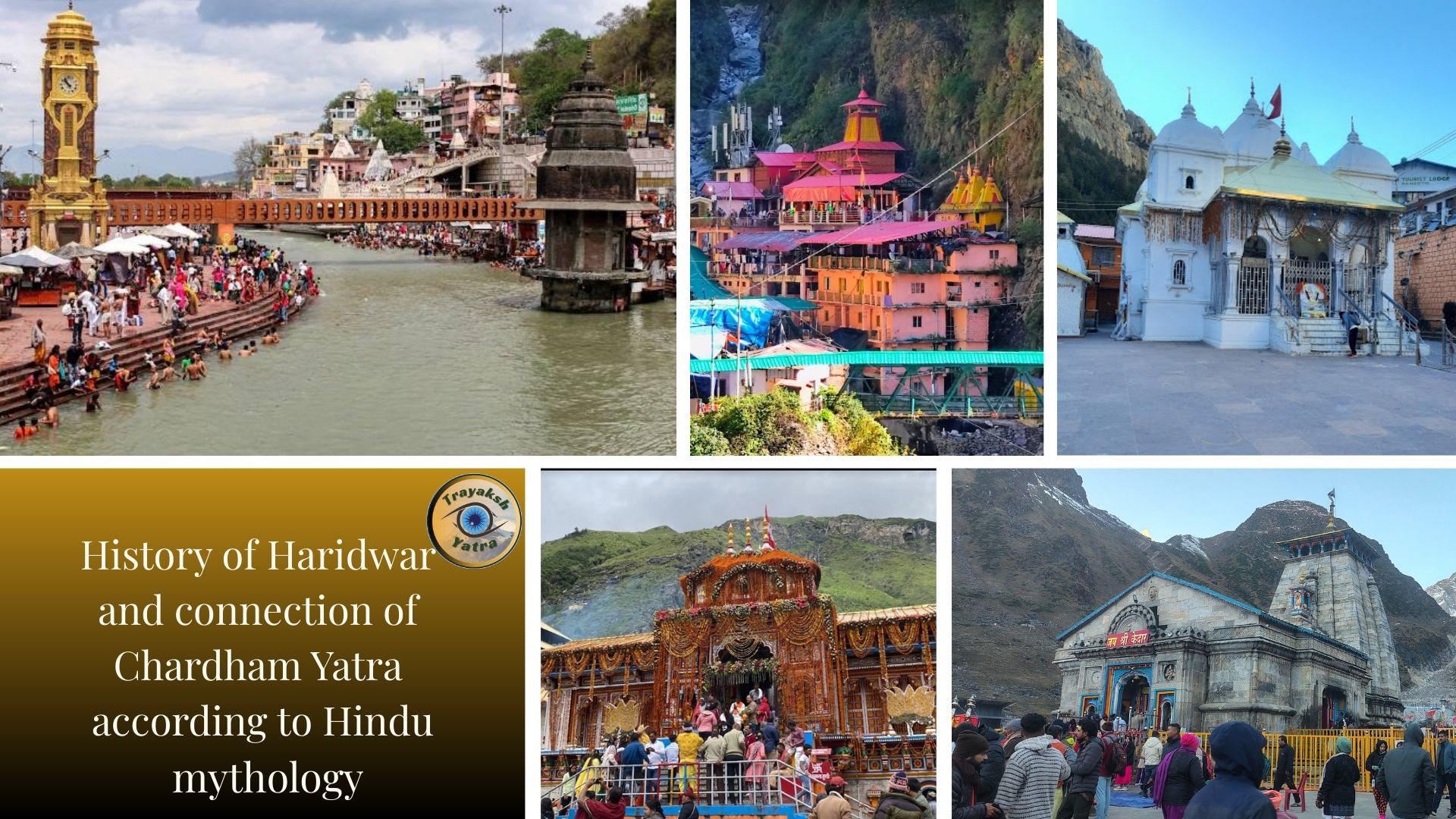
The Chardham Yatra is a revered pilgrimage that attracts countless devotees each year. It encompasses four sacred destinations: Yamunotri, Gangotri, Kedarnath, and Badrinath. Each site holds profound spiritual significance for Hindus.
– Explanation of Chardham Yatra
Chardham Yatra is a revered pilgrimage that takes devotees to four sacred sites in Uttarakhand: Yamunotri, Gangotri, Kedarnath, and Badrinath. Each of these destinations holds immense spiritual significance for Hindus.
- Yamunotri is dedicated to the goddess Yamuna and is known for its natural beauty and hot springs. Pilgrims often perform rituals here to seek blessings for their loved ones.
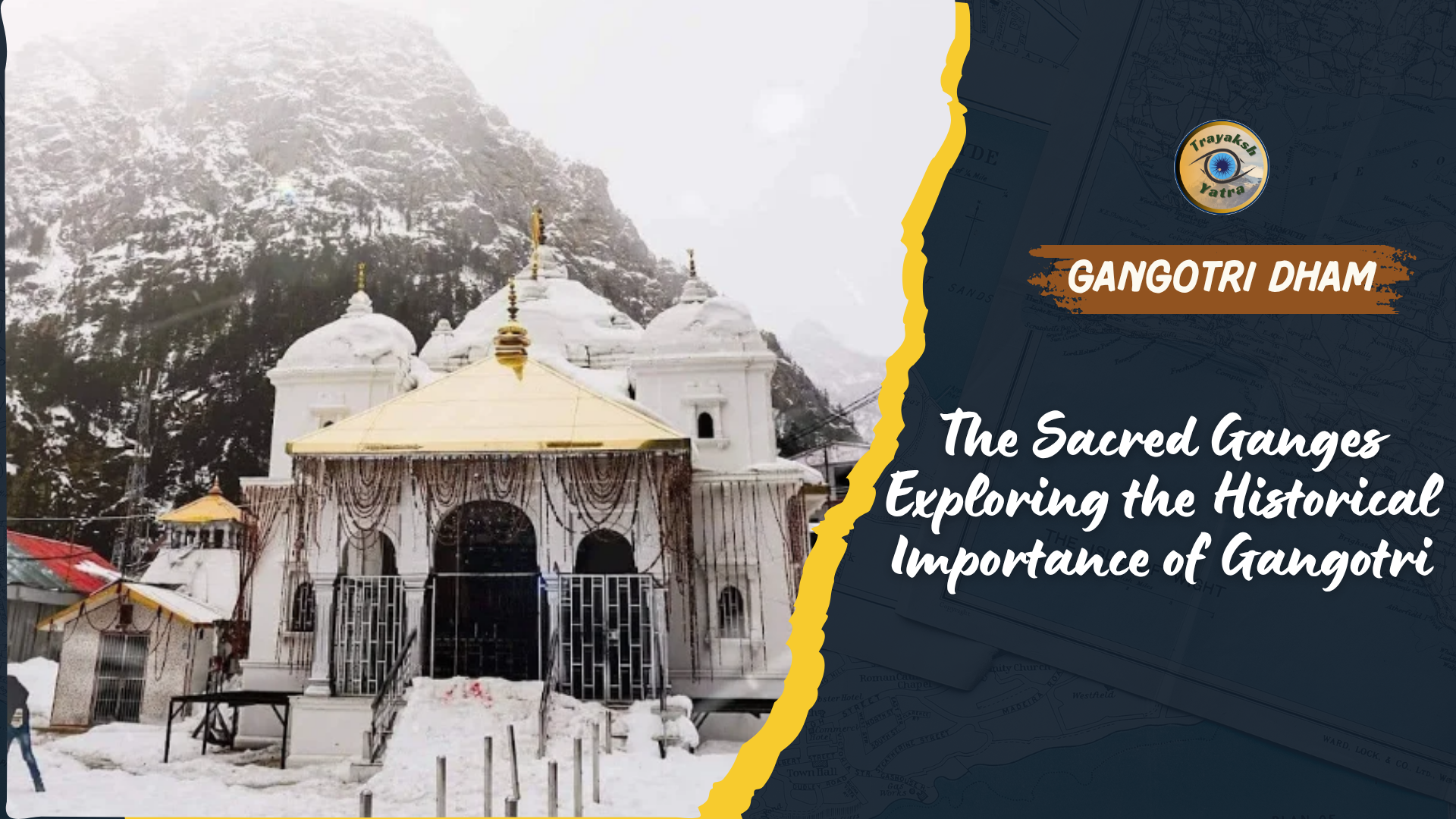
- Gangotri marks the origin of the Ganges River, one of Hinduism’s most holy rivers. It’s believed that bathing in its waters cleanses sins and grants liberation.
- Kedarnath houses one of the twelve Jyotirlingas dedicated to Lord Shiva. Its stunning mountain backdrop adds a sense of divine connection.
- Badrinath is devoted to Lord Vishnu and features breathtaking landscapes along with ancient temples steeped in history.
– Spiritual benefits of undertaking the pilgrimage
Undertaking the Chardham Yatra offers profound spiritual benefits that resonate deeply within devotees. The journey is not just physical; it’s a transformative experience for the soul. Pilgrims often find themselves reflecting on their lives, leading to inner peace and clarity.
Walking through the pilgrimage sites people take every step like praying. It feels good when you spend time with Mother Nature increases your spirituality. Sitting quietly by a sacred river or around holy mountains helps you connect with God.
Connection between Haridwar and Chardham Yatra
Haridwar is considered to be the gateway town to four holy places of Lord Shiva visited during the Chardham Yatra, which includes Yamunotri, Gangotri, Kedarnath, Badrinath. Haridwar means “gateway to God”, and that is exactly what it is. The town is holy in itself and holds great significance as the beginning of chardham yatra.
Haridwar has a very important role in the Char Dham Yatra, which includes the sacred temples of:
- Yamunotri Temple
- Gangotri Temple
- Kedarnath Temple
- Badrinath Temple
Traditionally, Haridwar is considered the starting point of the Char Dham pilgrimage. Pilgrims first take a holy dip in the Ganga at Har Ki Pauri to purify themselves before beginning the sacred journey into the Himalayas.
The name Haridwar itself reflects this connection:
- “Hari” refers to Lord Vishnu, whose sacred shrine is Badrinath.
- “Har” refers to Lord Shiva, whose holy temple is Kedarnath.
Thus, Haridwar is known as the gateway to both Vishnu and Shiva, symbolizing the spiritual entrance to the Char Dham pilgrimage.
Role of Haridwar as the gateway to the four sacred sites
Haridwar holds a pivotal role as the gateway to the revered Chardham Yatra. Pilgrims flock here, embarking on their spiritual journey toward four sacred sites: Yamunotri, Gangotri, Kedarnath, and Badrinath.
How Haridwar is a part of the Chardham circuit
Haridwar serves as the essential starting point for the Chardham Yatra, a revered pilgrimage that includes Yamunotri, Gangotri, Kedarnath, and Badrinath. Pilgrims flock to Haridwar to experience its sacred ambiance before embarking on their spiritual journey.
Tourists visiting here often take a dip at Har Ki Pauri before embarking upon any upcoming spiritual journey. Har ki Pauri is a very famous ghat where a large number of people offer puja and take a dip in the holy river Ganges. Purifying oneself here helps pilgrims kick start their spiritual voyage..
Major Temples and Shrines in Haridwar
Haridwar is one of the holiest cities in India and an important gateway to the Char Dham Yatra. The city is home to many ancient temples and sacred sites that attract millions of devotees every year.
1. Har Ki Pauri – Har Ki Pauri is the most sacred ghat in Haridwar and the spiritual center of the city.
2. Mansa Devi Temple – Sited on hilltop Bilwa Parvat, this temple is dedicated to Goddess Mansa Devi who is said to grant wishes of the devotees. Devotees reach temple premises either by ropeway or trekking. It is one of the busiest temple in Haridwar.
3. Chandi Devi Temple – Built on Neel Parvat, it is a temple of Goddess Chandi who is believed to be a fierce incarnation of Goddess Durga. Legend has it that Goddess vanquished two demons namely Shumbha and Nishumbha at this spot. It is yet another significant Shakti Peeth in Haridwar.
4. Maya Devi Temple – The Maya Devi Temple is one of the ancient temples of Haridwar and is considered a Shakti Peetha. The temple is dedicated to Goddess Maya, the presiding deity of the city. It is believed to be one of the oldest temples in the region.
5. Daksha Mahadev Temple – Nearby is the famous temple at Kankhal dedicated to Lord Shiva. This temple is famous for the mythological incident between King Daksha and Goddess Sati, which lead to Lord Shiva performing his cosmic dance of destruction.
6. Bharat Mata Mandir – Unlike traditional temples, Bharat Mata Mandir is dedicated to Mother India. The temple has multiple floors representing different eras of Indian history, great saints, freedom fighters, and cultural icons.
7. Pawan Dham – Pawan Dham is known for its beautiful glasswork and mirror decorations. The temple is famous for its artistic design and peaceful atmosphere.
8. Shantikunj Ashram – Shantikunj is the headquarters of the All World Gayatri Pariwar and a major spiritual center for meditation, yoga, and Vedic studies. Thousands of spiritual seekers visit this place every year.
Conclusion on the spiritual journey through Haridwar and its connection to Chardham Yatra.
Spiritual tour package Haridwar is not just about temples. It marks the commencement of your spiritual journey that is paved with prayers, rituals of purification and lots of bhav or devotion. Haridwar sits on the banks of River Ganga which is sacred to Hindus and has been witnessing pilgrims bathing in its holy waters, seeking redemption and purification of soul for centuries.
Char Dham Yatra is one of the most famous pilgrimages for devotees and Haridwar is known as the Gateway of Himalayas for the pilgrimage. Devotees start their yatra from here after taking a dip in holy Ganges at Har Ki Pauri and offering prayers to visit Yamunotri Temple, Gangotri Temple, Kedarnath Temple and Badrinath Temple.
Haridwar’s sanctity is infused with divinity from the holy atmosphere, its temples and currents of Ganga. Starting Char Dham Yatra from Haridwar purifies your mind and soul making way for you to undertake one of the holiest pilgrimages in Hinduism. Millions visit this holy city first as it is considered the doorway to God, enlightenment and Moksha.