
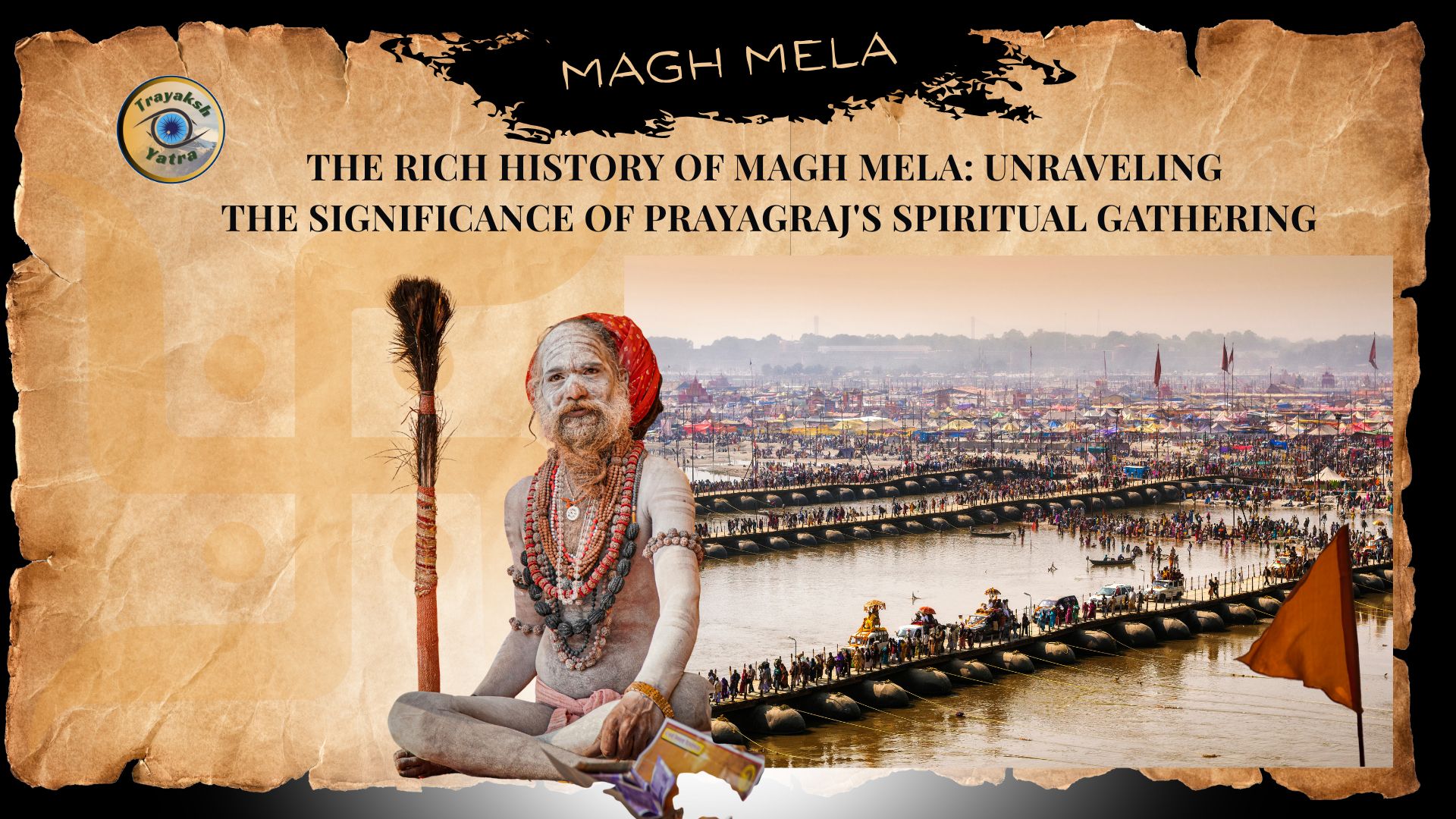
Winter is a season when the north of India experiences clear blue skies and a distinct nip in the air. As much as the cold breeze and overcast skies form a stark contrast to the tropical weather of the south, it also brings with it the resplendent gathering of Magh Mela on the banks of Ganga. Read on to find out more about the different events of Magh Mela and why it’s celebrated in Prayagraj. This age-old gathering isn’t just a festival it’s a journey through time a confluence where history meets spirituality, drawing millions from all walks of life who seek solace and enlightenment amid its colourful chaos. In this blog post, we will delve into the rich heritage behind this mesmerizing event—exploring its origins steeped in mythology, its evolution over centuries, and the profound significance it holds for pilgrims today. Join us as we unravel the stories woven into every prayer offered at sunrise and every splash made in holy waters. Discover why Magh Mela is not merely an event on a calendar but rather an enduring legacy that reflects India’s deep-rooted spiritual traditions!
Introduction to Magh Mela and its significance in Prayagraj’s spiritual landscape
The banks of the Ganga turn a riot of colors, chants and spirituality every year. The Magh Mela in Prayagraj is a mega congregation that sees millions of people come in search of peace, cleansing and spiritual satiation. It has immense significance for pilgrims as well as city residents. It is an amalgamation of timeless traditions and contemporary influences.
When you visit this sacred place at any point in the year (usually in January-February), you will notice a meeting of caste and community with similar beliefs and practices. Magh Mela can be an experience for the devotees in search of enlightenment or even just the curious onlooker wanting to see this miraculous spectacle. There is a plethora of things that make Magh Mela such a unique experience. Let’s take a look at the history of this fascinating event and understand its role in the spiritual culture of India.
History of Magh Mela: From ancient times to modern day celebrations
Magh Mela has a very old tradition attached to it. Magh Mela originated during the Puranic period. It is believed that in the Puranas, this month is glorified as a holy time for expiation and penance. People believe that a bath during this month would absolve them of their sins.
Over centuries, Magh Mela evolved into an annual festival celebrated with great fervor. Pilgrims flocked to Prayagraj, drawn by promises of spiritual rejuvenation and divine blessings.
The event gained momentum during the British Raj when organized efforts began to manage crowds and safety better. The scale expanded dramatically post-independence, transforming it into a vibrant confluence of faith, culture, and community.
Today’s celebrations are marked by elaborate rituals alongside modern conveniences—making spirituality accessible while retaining its rich heritage.
The Rituals and Traditions of Magh Mela: A deep dive into the spiritual practices and customs observed during the event
The Magh Mela Prayagraj is full of religious rituals, based on ancient belief. Devotees visit from all over India to have holy dips in the Ganges at the favourable timings. They take this ritual to purify the soul and get rid of the sins.
Devotees are taken into the thrills of festivals celebrating the Hindu gods. The chanting of mantras is heard across the temple as priests conduct the pujas.
The air is filled with traditional music and dance. Folk artists also take to the stage to display their art and culture.
Another cherished tradition involves offering prayers on floating lamps during evening aarti ceremonies. This illuminates both the river and hearts of worshippers who seek solace and connection.
Sacred food offerings called prasad play an important role too. Sharing these blessed morsels fosters a sense of community among attendees, bridging gaps between diverse backgrounds united by faith.
Key attractions and activities at Magh Mela: From holy dips in the Ganges to cultural performances, explore all that this gathering has to offer
Magh Mela in Prayagraj is a vibrant tapestry of spiritual and cultural experiences. One of the most revered activities is taking a holy dip in the Ganges, believed to cleanse the soul and wash away sins. Pilgrims gather at various ghats, creating a mesmerizing spectacle.
The atmosphere buzzes with devotion as sadhus perform rituals and chants fill the air. Visitors can witness yoga demonstrations that highlight ancient practices aimed at achieving harmony.
Artisans showcase their crafts, offering everything from intricately designed jewelry to handwoven textiles. Local cuisine wafts through the crowd; stalls brim with mouthwatering treats like kachoris and sweets.
There are cultural programs as well, which include music and dances that celebrate India’s rich culture. The whole environment is energetic and pulls everyone together in the spirit of celebration and faith. There’s a moment of connection to be found with every second spent at this holy event, both spiritually and culturally.
Insider tips for attending Magh Mela: What to expect, what to pack, and how to make the most out of your experience
Experience of visiting Magh Mela at Prayagraj: Do not expect anything less than huge crowds, a sea of colour and a very spiritual atmosphere in general at Magh Mela. Be prepared. Dress conservatively but wear comfortable clothes and shoes as you will be doing a lot of walking. Layer your clothes – it can be quite warm during the day and very cool at night.
Pack essentials like sunscreen, water bottles, snacks etc. You may also like to carry a small first aid kit for minor emergencies. Be ready to rise early. Holy dips in the Ganges are best taken at dawn when the air is felt most divine.
Speak to the people and other pilgrims. They are the ones with the stories and you will find it much easier to get around such a huge festival with their help. Finally, just wander a bit. Leave the main stages and events for a bit and head off down the side streets. You never know what you might find, and some of the best traditions are tucked away out of plain sight.
The Impact of Magh Mela on Prayagraj’s economy and culture
Magh Mela Prayagraj is also an important economic driver for the region. Every year, millions of pilgrims and tourists visit the city, which creates a market full of local artisans selling crafts, food vendors serving traditional dishes, and shops meeting the spiritual needs of visitors, all of which provide a source of income for small businesses and generate revenue for the local economy.
Magh Mela is a social and cultural event. The fair features musical and dance performances from all over India. Magh Mela is a traditional expression of the local culture. Artists from the area are able to showcase their talents. Visitors are exposed to the local traditions from times long past.
The festival also promotes social bonding among residents and visitors. Locals sometimes host travellers, creating an atmosphere of fellowship. Sharing food and experiences, they exchange diverse cultural perspectives. Rituals along the Ganges’ banks reaffirm Prayagraj’s spiritual identity. This sacred convergence spot melds tradition with modernity, captivating pilgrims.
Conclusion: Reflecting on the enduring legacy
Magh Mela Prayagraj Magh Mela Prayagraj was celebrated with traditional fervour and Indian characteristics. The oldest of all the melas, this is one where the rituals and customs have changed over the past few years. The spirit of the fair is, however, in the same place – being a festival to which devotees and visitors come not just to worship, but to socialize and engage in a large-scale family reunion of sorts, and to bask in the lively atmosphere of the age old and traditional Indian culture.
The rituals observed during the Mela connect individuals with their spirituality, offering them moments of reflection and devotion. The holy dips in the Ganges symbolize purification and renewal, drawing thousands from various walks of life seeking solace or enlightenment.
Beyond spirituality lies an array of cultural experiences—dance performances, music recitals, and culinary delights that capture the essence of Indian diversity. Each corner of Magh Mela bursts with energy and offers something unique for every visitor.
Attending this grand festival requires some planning but promises unforgettable memories in return. From packing essentials to navigating through crowds, being prepared enhances your experience significantly.
Moreover, Magh Mela’s influence extends beyond personal transformation; it plays a crucial role in bolstering Prayagraj’s economy. Local businesses thrive during these days as pilgrims flock to the city searching for spiritual connection alongside local craftsmanship.
As we reflect on the enduring legacy of Magh Mela Prayagraj, it becomes clear that this event transcends time—a bridge connecting generations through shared beliefs and practices. Whether you visit for spiritual awakening or cultural exploration, participating in this incredible gathering leaves an imprint on one’s soul that lingers long after returning home.


