THE STORY BEHIND THE ADI GURU SHANKARACHARYA STATUE IN KEDARNATH: Kedarnath is not only a place of pilgrimage; it is also a sanctuary where spirituality and art meet in the midst of the Himalayas. In the midst of the hills stands a statue that towers over the entire area. It is not a giant just in stature. He is one of India’s most prominent spiritual leaders, Adi Guru Shankaracharya. The way this statue is in Kedarnath itself is a very interesting story.
How did this glorious statue come into existence? Come, let us take a trip back in time and space as we unfold the fascinating story behind this statue and the process by which it was created. Let us all learn about how thought was turned into stone to not only commemorate the great Shankaracharya, but to also motivate people in the generations to come to take to such depth of thought. Get ready to be dazzled as we dive into the past and into art and bhakti where each stroke of the chisel has a tale to tell!
Introduction to the Adi Guru Shankaracharya Statue in Kedarnath
Kedarnath is a place of true spiritual and cultural significance. It is situated in the lap of Himalayas and is a symbol of riches. A grand statue built in the Kedarnath temple enshrines the power of the one and only ‘Adi Guru Shankaracharya’. The wonderful sculpture is an embodiment of everything that represents India and her age old traditions. For those embarking on a Chardham Yatra package or planning their Kedarnath Dham yatra package, experiencing this monumental representation offers more than just visual splendour—it’s an invitation to delve into centuries-old wisdom and devotion. Join us as we explore the story behind this magnificent statue, its creator, and what it means for devotees today.
Who was Adi Guru Shankaracharya?
Adi Guru Shankaracharya, a towering figure in Indian philosophy, was born in the 8th century. He is best known for consolidating the doctrine of Advaita Vedanta, which emphasizes non-dualism and advocates that the individual soul (Atman) is identical to the ultimate reality (Brahman).
Shankaracharya went on pilgrimages across the Indian subcontinent and discussed philosophy with learned scholars and monks. He held debates to challenge the popular assumptions of the time and reestablish the fading Hindu spirituality at a time of Buddhist revival.
He founded four principal matha’s or monasteries in the four parts of India, from which his teachings were propagated. The monasteries became the centres of important philosophical discussions and spiritual discourses. He has authored many works on Hindu philosophy. His works include commentaries on Upanishads and Bhagavad Gita, which provide the intellectual basis for a lot of contemporary Hindu thinking.
The Significance of Kedarnath in Hinduism and the Role of Adi Guru Shankaracharya
Kedarnath is one of the holiest shrines in Hinduism, nestled in the majestic Himalayas. It attracts countless pilgrims seeking spiritual solace and divine blessings. This sacred site is dedicated to Lord Shiva, representing one of the twelve Jyotirlingas, making it a vital pilgrimage destination on the Chardham Yatra.
Adi Guru Shankaracharya played a pivotal role in reviving and promoting Hindu philosophy during an era of spiritual decline. He established a matha (monastic institution) at Kedarnath, reinforcing its significance as a center for learning and devotion.
He propagated the Advaita Vedanta philosophy of non-dualism and the oneness of the individual soul with Brahman the absolute. Kedarnath under the guidance of Adi Shankaracharya, became a place not only of ritual but of intellectual and spiritual development. As devotees make their way to Kedarnath Dham yatra package, they often look for a deeper understanding of the life and legacy of Shankaracharya.
The Design and Construction of the Statue
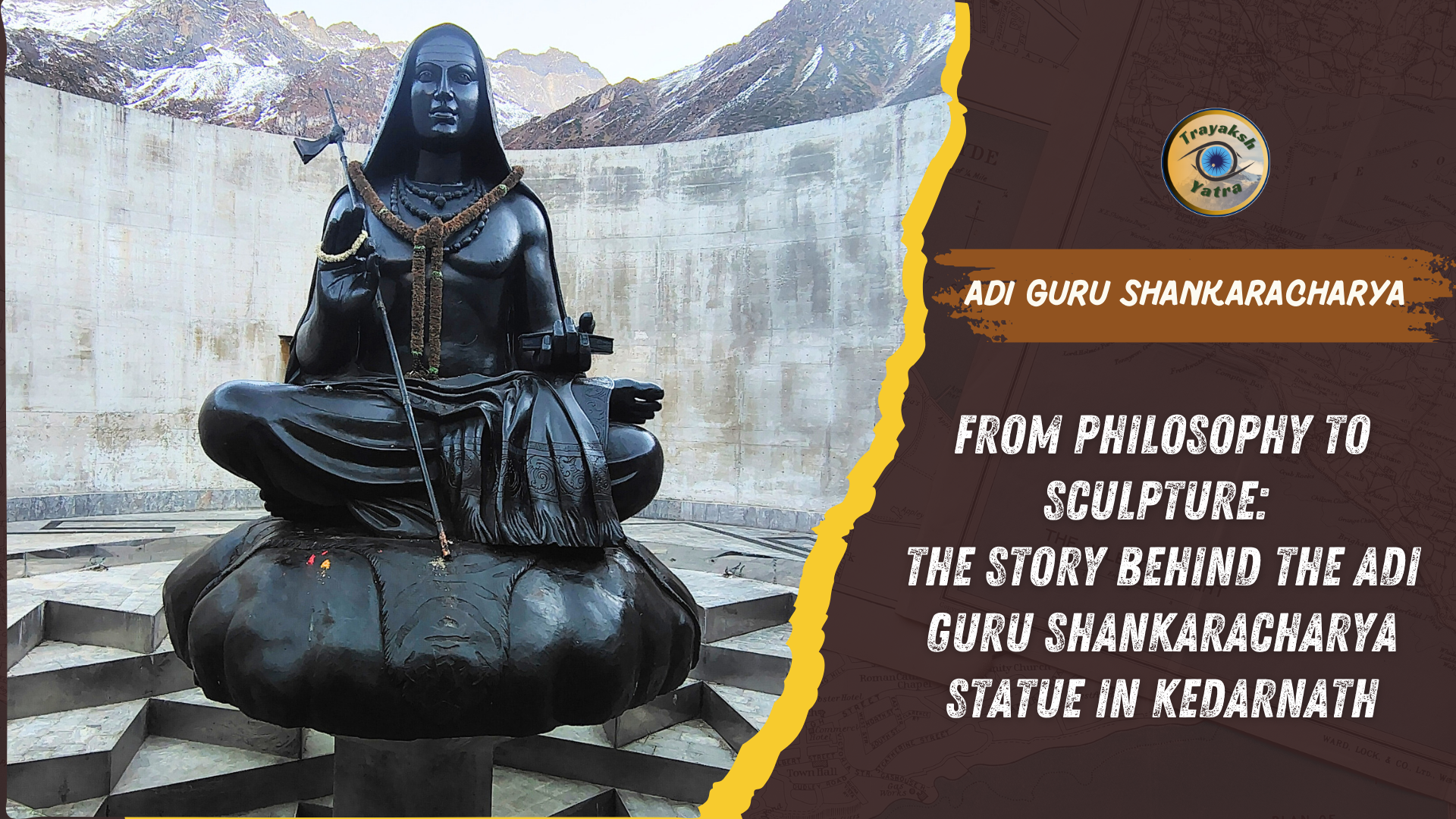
The Adi Guru Shankaracharya statue in Kedarnath, located in the Garbh Gudi of the temple, is a magnificent creation. The grand statue is made up of 12-feet high idol of Shankaracharya. The idol is made with the perfect representation of Shankaracharya’s wisdom and enlightenment.
The statue was created with exquisite detailing and craftsmanship. The idol of Shankaracharya is made up of bronze and the artists had put in immense hard work and great focus on every minute detail of this idol. From his calm expression to the draping robes, every element of the statue represents knowledge.
The statue’s construction location was an advantage as it was constructed against the picturesque and magnificent backdrop of Kedarnath which added to its uniqueness. The challenging geographical location was marked by extreme weather conditions, which often posed a hurdle to the construction engineers who continued their work undeterred. Local artisans have been the backbone of this project and have helped in giving life to this vision of faith which would connect to every soul who visits this serene place to seek solace for their heart. As a visitor stands before the statue, what greets them is not just a work of art but also the devotion and reverence that has been imbibed over many years.
Symbolism and Meaning behind the Sculpture
The Adi Guru Shankaracharya Statue in Kedarnath is a work of great depth. It is a manifestation of the wisdom and spiritual teachings that he imparted to the world. The statue radiates a sense of calm and enlightenment. It also embodies the essence of Advaita philosophy which preaches the oneness of the individual soul and the ultimate reality. Every aspect of the sculpture from its posture to its expression has a deep meaning. The posture of the statue is one of meditation it exudes a sense of inner peace and enlightenment. As if he is inviting the viewer to embark on the journey of self-realization.
The things that are surrounding it also add to the beauty of this statue. The lotus flowers for example which represent purity. The serpents surrounding it which are for warding off the ignorance of the material world. Every single element reminds us about the opposing realities of life. The material and the spiritual.
Made so intricately it is not only a visual treat but also a guiding force for all the pilgrims to show them their path. It is a beautiful example of how art can make even the most philosophical and spiritual concepts so simple for every visitor to Kedarnath Dham.
Controversies Surrounding the Statue
It was not without its share of controversies, the Adi Guru Shankaracharya statue in Kedarnath. While some questioned the choice of placement as it overshadowed the sanctity of the original temple complex, others felt it distracted from spiritual practice and devotion, with the monument being considered too grand.
Additionally, debates have erupted regarding funding and resources allocated for this project. Many feel that these funds might be better spent on local community needs or environmental preservation efforts in the fragile Himalayan region.
Opinions within Hinduism itself differ as to whether such statues are in keeping with the more traditional aspects of the faith. This is contrasted against the modern faith in larger than life statues.
Note that these discussions and points of view bring forth the conflict of what the ancient believes and the modern culture tries to accomplish
Importance of Preserving Cultural Heritage and Religious Icons
Statues or replicas of divine or people who made some important deeds for the good or progress are one part of human life. Museums, palaces, or temples are the other half. These two complement each other and become an important part of society.
It is important to preserve these aspects for future generations. They are great learning aids for the younger generation in understanding their origins. Adi Guru Shankaracharya Statue in Kedarnath is one such fine example of ancient ideas being relevant in modern spiritual concepts.
Culture: It gives a sense of identity to the community. People gather together to celebrate and reaffirm the common values and the continuity of their cultural heritage through the rituals related to these icons. Identity is more so strengthened during these times and provide a social unity to the society which is most needed in the present times.
In times when cultural elements are disappearing due to globalization, the protection of these riches is of more importance. Safeguarding cultural heritage gives the message that the unique voices of the local cultures are not being suffocated in the global hum.
Conclusion: Commemorating an Iconic Figure through Art
Adi Guru Shankaracharya Statue In Kedarnath: Make your visit to Kedarnath a sacred one and pay your tribute to the great philosopher saint by visiting this wonderful statue that bears his name. Immerse yourself in the spiritual atmosphere that radiates from this beautiful monument and learn more about the importance and grandeur of the Adi Guru Shankaracharya Statue in Kedarnath in this blog. Read on and discover the significance and artistry that makes this a must-visit landmark during your chardham yatra package.
As part of a larger pilgrimage experience, including those exploring the kedarnath dham yatra package, visitors gain insights into India’s rich cultural tapestry. The statue serves as more than just an artwork; it embodies centuries of philosophical thought and religious devotion that continue to inspire countless individuals today.
Our duty is to preserve this symbol of cultural heritage for future generations so that they know their history. Every time we visit this place, we participate in the eternal memory of what was steeped in folk wisdom and spirituality, and learn to respect other people’s beliefs. With this beautiful sculpture, we want to pay tribute not only to a person but also to a type of thought that called on all people of wisdom to look within themselves, to find support in each other and to enlighten others on their path.
Each journey taken towards Kedarnath offers moments for reflection amid breathtaking natural beauty a reminder that art can bridge gaps across time while connecting hearts through shared aspirations toward truth and understanding.